India is at a historic turning point right now. The country has a youthful energy that is craved by rapidly aging nations. According to UNFPA reports, over 50% of its population is under 25 and over 65% under 35. Indians are currently about 29 years old on average, which is far younger than the medians of 40.2 in China and 49.9 in Japan (World Population Review). This “demographic dividend” becomes an economic asset only when young people are productively employed. When job creation fails to keep pace with the expanding workforce, the dividend risks turn into a demographic burden: the problem of youth unemployment.
Youth unemployment refers to the share of the labor force between the ages of 15 and 29 who are without work but are actively seeking it. According to Periodic Labour Force Survey (PLFS), the youth unemployment rate in India was roughly 14.3% as of the end of 2025, which is significantly higher than the 4.8% general unemployment rate. Closing this gap is not only a social obligation, but also an economic requirement, since prolonged youth unemployment depletes human capital, dampens innovation, and limits long-term growth potential.
The Youth Unemployment Problem
To understand whether India is converting its youthful population into economic strength, it is important to examine how youth unemployment has evolved over time, both domestically and globally.
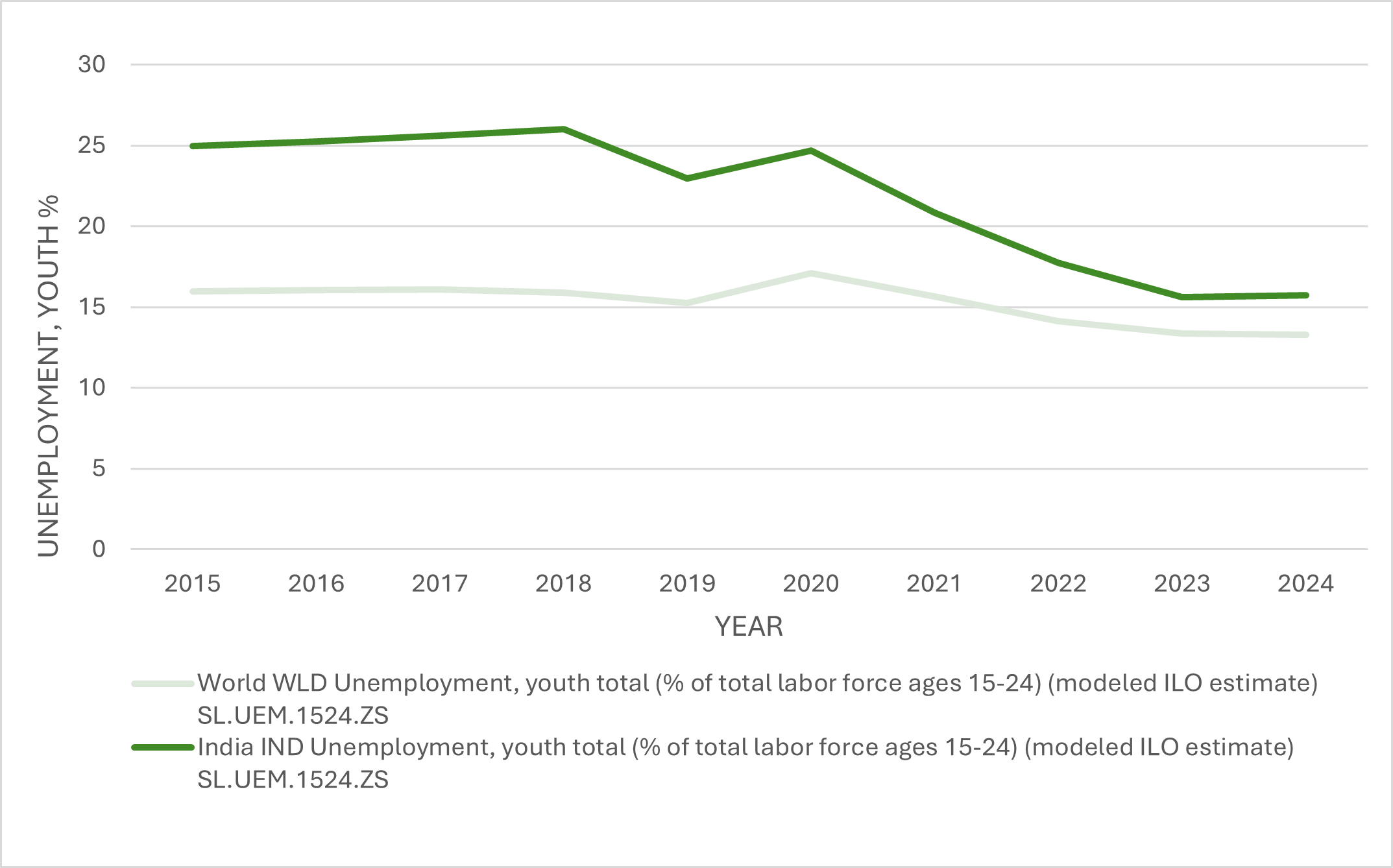
Fig 1: Youth Unemployment Trends – India vs Global (2015–2024)
Between 2015 and 2018, India’s youth unemployment remained persistently high at roughly 24–26%, compared to the global average of 15–16%. This suggests that even under steady global conditions, India experienced profound labor market frictions rather than temporary demand deficits. The pandemic in 2020 marks a significant structural breach, with India’s youth unemployment rate climbing to roughly 24-25% and the global rate to around 17%, indicating a simultaneous external shock. However, the post-2021 recovery reveals a more important distinction: while global youth unemployment falls to 13-14% by 2023-24, India stabilizes at 15-16%, which is still structurally above the global baseline and well below its pre-2019 peak but does not converge with international norms. This longevity of a gap, even after economic normalization, indicates that worldwide young unemployment is mostly a cyclical variable, whereas in India it reflects a greater structural equilibrium caused by skill mismatches, informality, and weak education-to-employment transitions.
However, unemployment statistics tell only part of the story. Even among those who are employed, a deeper structural problem is emerging, one that concerns the quality and relevance of jobs rather than mere job availability.
As climate risks intensify and cities densify, landfills operate as delayed environmental liabilities. Managing them is no longer just a sanitation issue; it is a strategic urban and climate imperative.
Urban flooding also has longer-term socioeconomic consequences. Floodwater contaminates water supplies, creates risks of water-borne diseases, disrupts businesses, slows economic activity, and erodes public confidence in local governments’ ability to protect communities. In Kathmandu, where dense populations rely on a limited transportation network, even short episodes of inundation paralyze mobility and access to critical services.
The Invisible Crisis: Skills Mismatch & Underemployment
Young Indians are not only unable to find jobs, but when they do, they are typically overqualified, underpaid, and locked in jobs that do not require their degrees. This is the hidden catastrophe of underemployment.
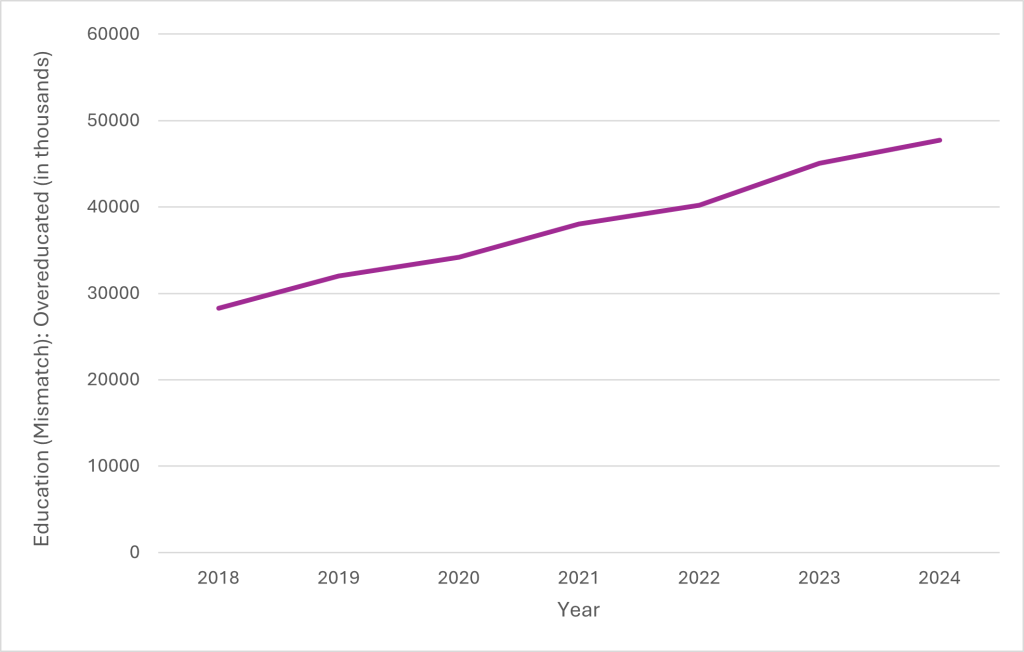
Fig 2: Education (Mismatch): Overeducated- India (2018–2024)
India’s education overmatch has surged from 28,000 in 2018 to over 50,000 by 2024, signaling a deepening mismatch between graduate supply and job quality. According to the 2024-25 Economic Survey, India’s expanding education overmatch leads to substantial economic and social inefficiencies, with only 8.25% of graduates working in qualification-matched occupations, leaving others either unemployed or in “mis-employed” role, i.e., low-skilled jobs. Over-education leads to wage penalties and productivity losses, as 53% of graduates work low-skill roles earning under Rs 1 lakh annually despite advanced qualifications.
This reflects a structural skill mismatch, in which rapidly evolving industry demands outstrip outdated curriculum and insufficient industry-academia alignment, leaving graduates with qualifications that do not match employer needs.
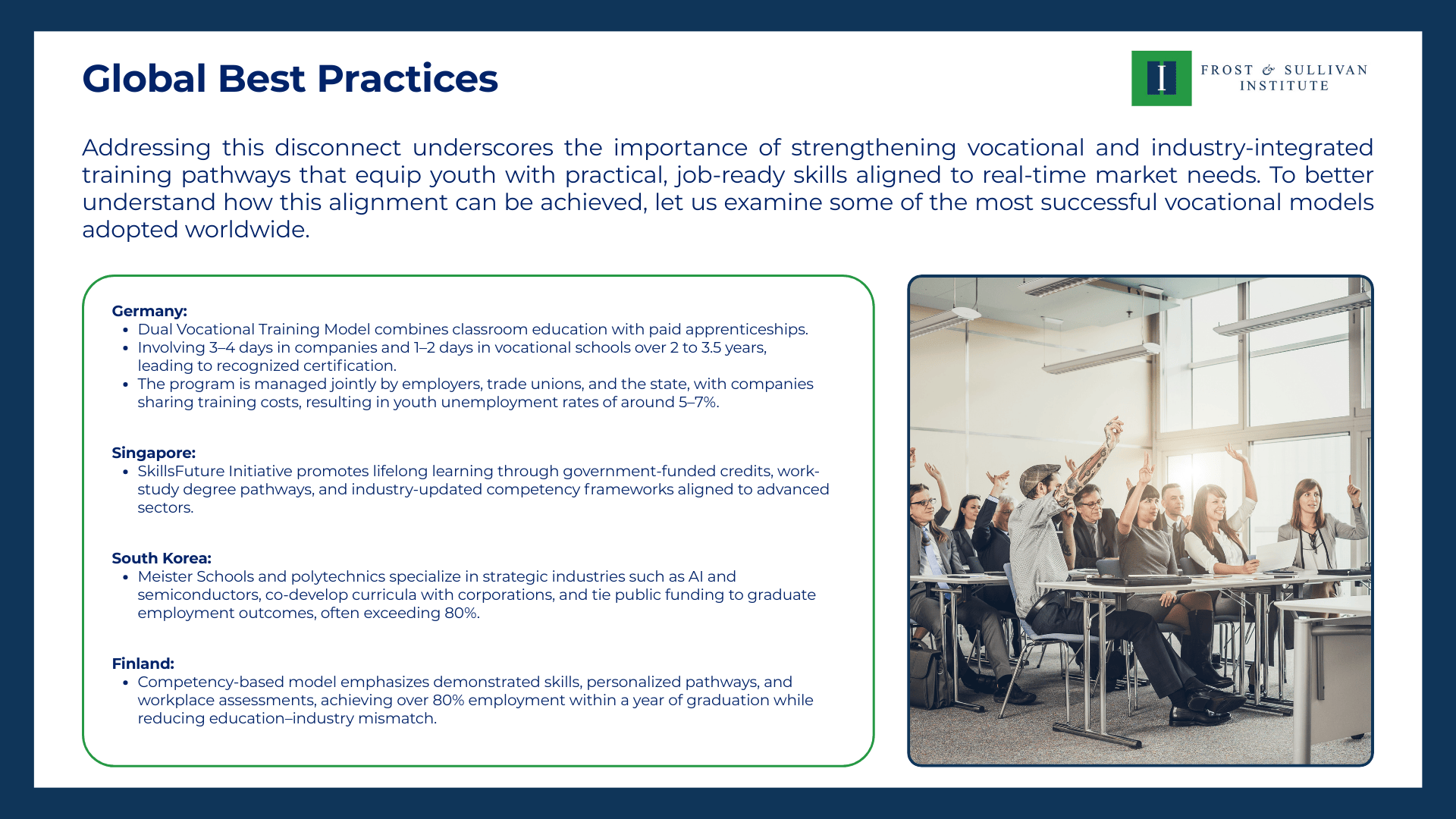
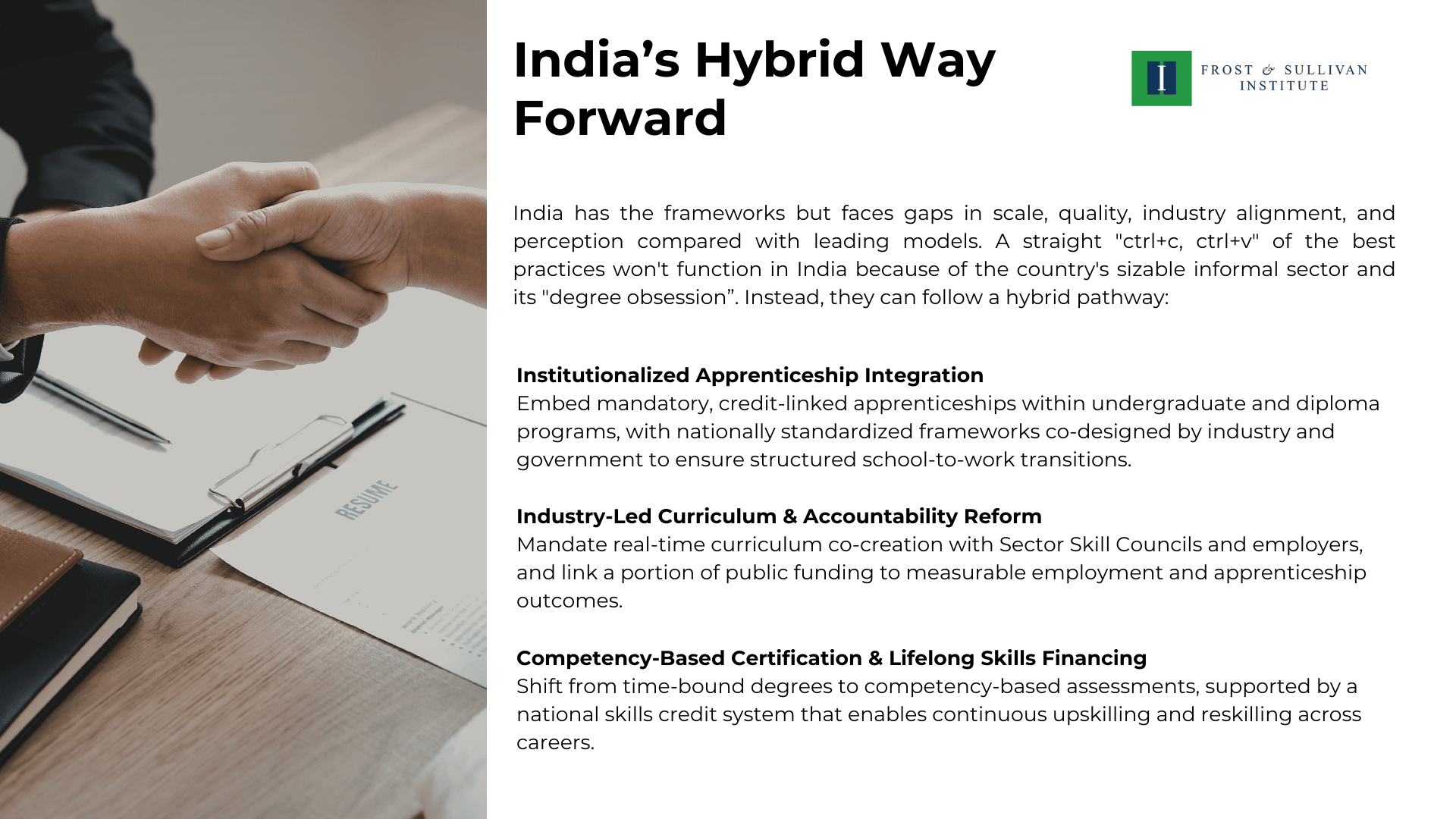
Successful education systems across geographies share structural foundations: they institutionalize school-to-work transitions through embedded apprenticeships, link funding and accountability to employment outcomes rather than enrollment numbers, and view skills as dynamic assets supported by competency-based certification and lifelong learning paths. In essence, employability is manufactured by institutional design and result alignment, rather than passive market correction.
Conclusion
The challenge, therefore, is not whether India has talent; it is whether the system can channel that talent productively and equitably. India does not suffer from a shortage of degrees; it suffers from a disconnect between education and productive employment. By adapting hybrid versions of successful global models, India can move from credential accumulation to capability creation. Such reforms would not only structurally reduce youth unemployment, but also address graduate underemployment, strengthen wage outcomes, and ultimately elevate national productivity. The path forward lies in aligning education with industry, skills with demand, and degrees with dignity of work.
Blog by Samyuktha Purusothaman Nair, Research Analyst, Frost & Sullivan Institute