For decades, the human brain has remained one of medicine’s most complex frontiers. Historically, influencing neural activity has relied on two primary approaches: altering brain chemistry through pharmacological treatments or intervening directly through neurosurgical procedures. As neuroscience advances and mapping of neural circuits becomes more precise, interest has grown in methods that can interact with the brain in targeted ways while minimizing systemic exposure or surgical risk.
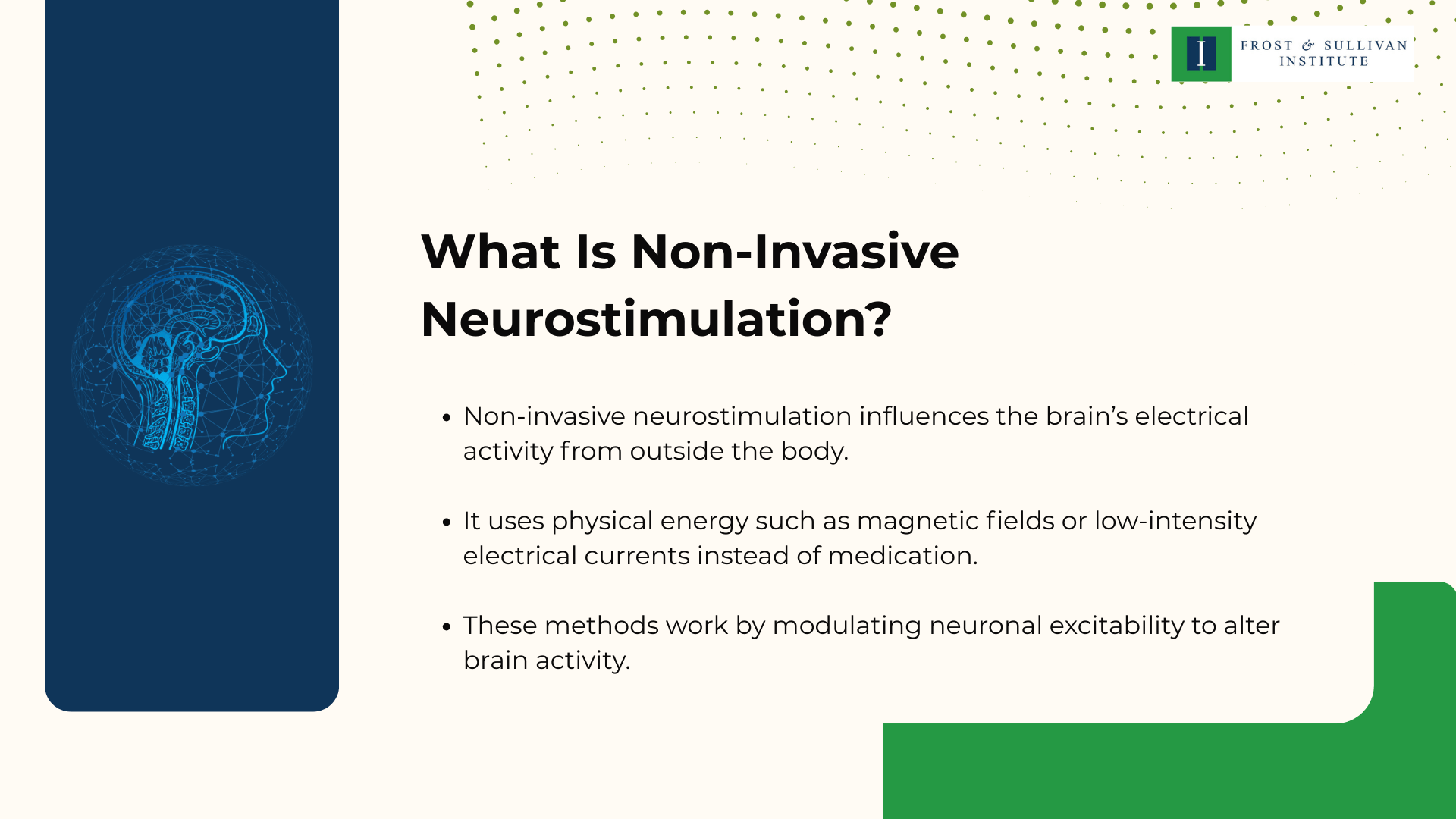
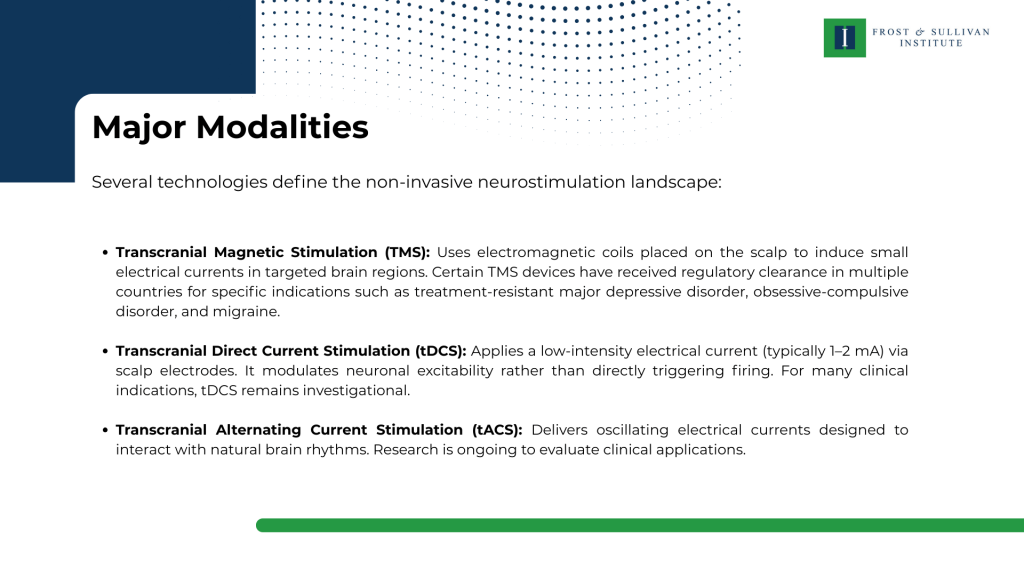
A growing body of research now explores technologies capable of modulating neural activity without penetrating the skull. Broadly referred to as non-invasive neurostimulation (NINS), this field represents an evolving shift in how clinicians and researchers approach brain health, not as a replacement for existing therapies, but as a complementary modality with distinct characteristics.
The objective is not to override brain function, but to adjust neural signaling patterns associated with specific symptoms or disorders. In most clinical contexts, NINS is administered under medical supervision and frequently used alongside standard treatments rather than as a standalone intervention.
How It Differs from Traditional Approaches
Pharmacotherapy acts systemically and can produce off-target side effects due to widespread distribution in the body. While effective for many patients, medications may cause fatigue, weight changes, or gastrointestinal issues.
Invasive neuromodulation, such as implanted stimulation systems, offers high anatomical precision but requires surgery and carries procedural risks.
NINS avoids surgical implantation and systemic drug exposure. While generally associated with a favourable safety profile, it typically provides less anatomical precision than implanted devices, and outcomes may vary across individuals.
What Does the Evidence Show?
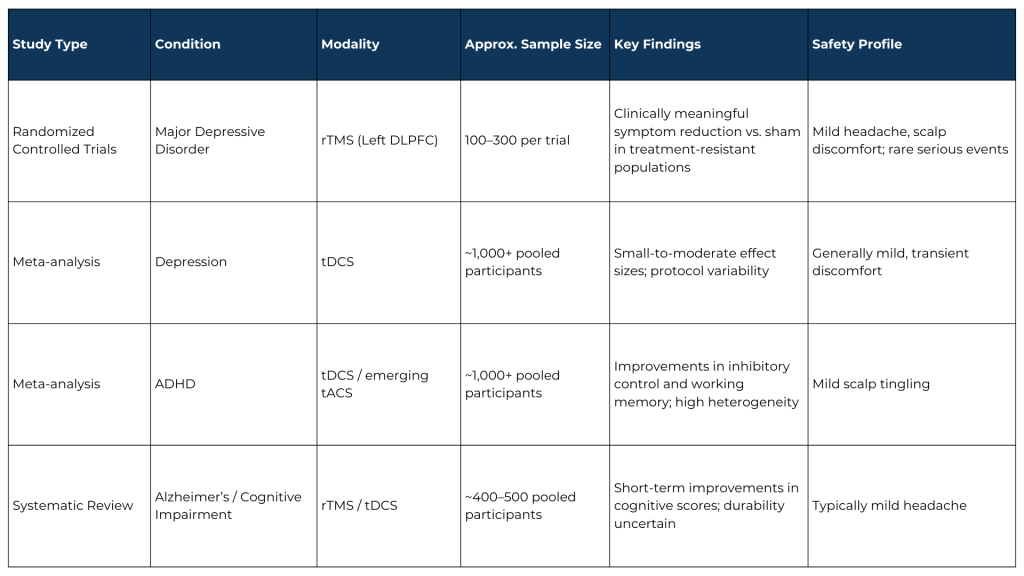
A growing number of peer-reviewed trials and meta-analyses have examined non-invasive brain stimulation across psychiatric and neurological conditions. Results suggest statistically significant benefits in selected populations, though effect sizes, durability, and reproducibility vary.
Table: Snapshot of Selected Clinical Evidence in Non-Invasive Neurostimulation
Across modalities, reported side effects are generally mild and temporary, most commonly scalp discomfort or headache. Serious adverse events are rare when protocols are properly administered.
However, variability remains significant. Many studies involve modest sample sizes, differing stimulation parameters, and inconsistent outcome measures. As a result, generalizability across populations and long-term effectiveness remain areas of ongoing investigation.
The Role of Artificial Intelligence
Artificial Intelligence (AI) is increasingly being explored as a potential tool to address variability. Researchers are investigating whether machine learning models can analyze EEG or imaging biomarkers, predict treatment response, and optimize stimulation parameters in adaptive systems.
While these approaches are still early-stage, AI-guided personalization may help shift neurostimulation from standardized protocols toward more individualized, data-informed frameworks. Robust clinical validation will be essential before such systems are widely adopted.
Conclusion
Non-invasive neurostimulation represents an evolving extension of modern neuroscience rather than a disruptive replacement for established standards of care. Its appeal lies in the possibility of targeted neural modulation without systemic pharmacological exposure or surgical intervention.
Current evidence suggests measurable benefits in certain conditions when administered in structured clinical settings. At the same time, variability in outcomes, evolving protocols, and the need for larger multi-center trials underscore that the field remains in development.
With continued scientific rigor, transparent regulatory oversight, and careful integration into existing care pathways, non-invasive neurostimulation may contribute meaningfully to a more diversified and precision-oriented approach to brain health.
Blog by Samyuktha Purusothaman Nair, Research Analyst, Frost & Sullivan Institute