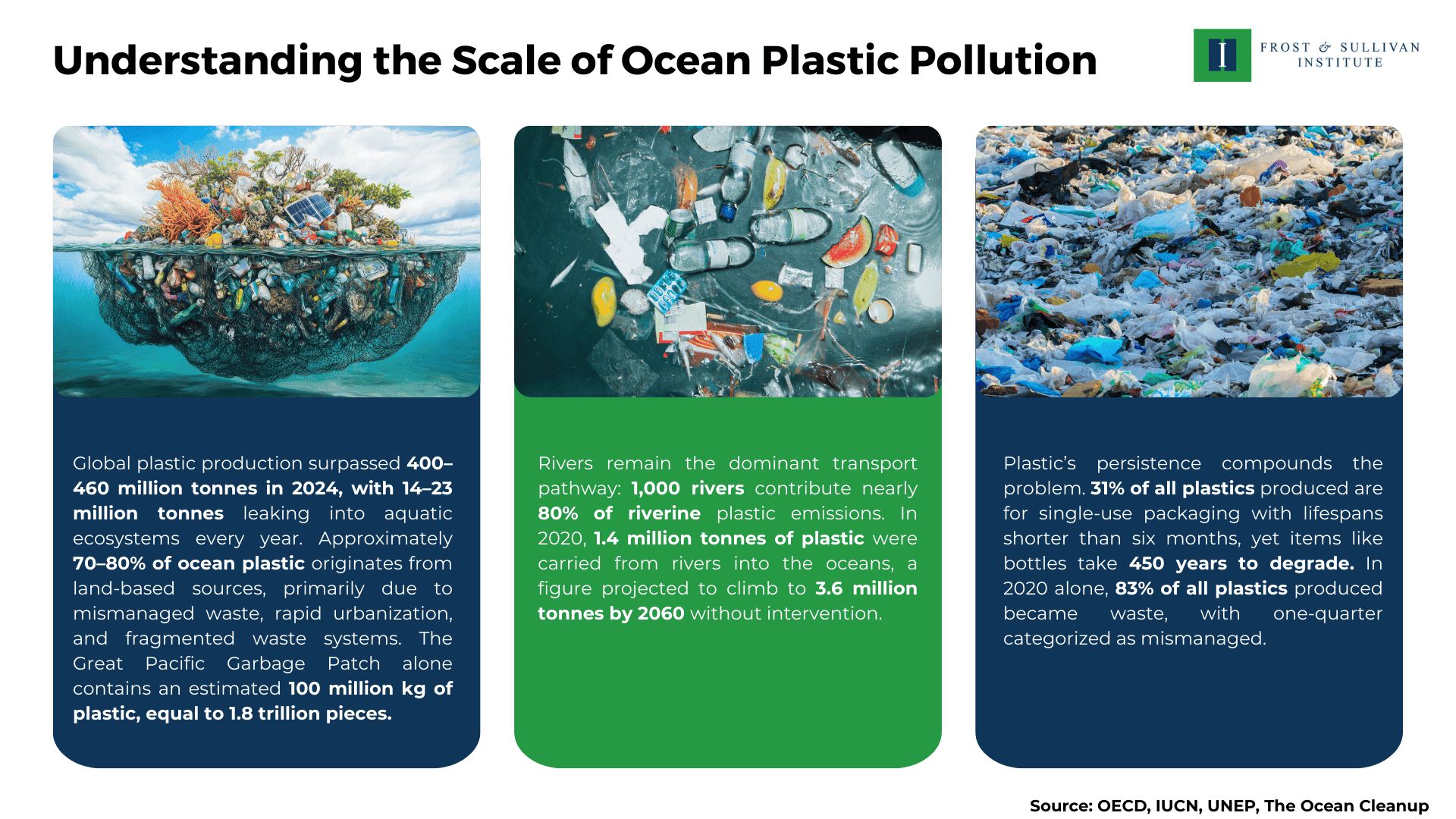
Every minute, the equivalent of one garbage truck full of plastic enters the ocean. With an estimated 75–199 million tonnes of ocean plastic already contaminating marine ecosystems, the crisis threatens biodiversity, public health, and the livelihoods of more than 3 billion people dependent on the ocean for food and income. Yet, amid worsening projections, a wave of innovation is reshaping the fight against marine pollution. From Bali’s River systems to global coastlines and marinas, pioneering organizations are demonstrating that measurable, scalable solutions are within reach.
Environmental, Social, and Economic Consequences of Ocean Plastic
Nearly 1,000 marine species are affected by plastic ingestion or entanglement. Over 56% of marine life has ingested plastics, leading to starvation, injury, or death. Microplastic exposure is equally alarming: blue whales may ingest up to 10 million microplastic particles per day, equivalent to 230 kg–4 tonnes per feeding season.
Microplastics are now found in sea salt, drinking water, and even human placentas, pose emerging health risks including endocrine disruption, inflammatory responses, and potential cardiovascular effects. Plastics also disrupt the ocean’s role in climate regulation; research shows that zooplankton exposed to microplastics consume 40% less carbon biomass, potentially weakening the marine carbon pump.
Economic and Human Health Burden
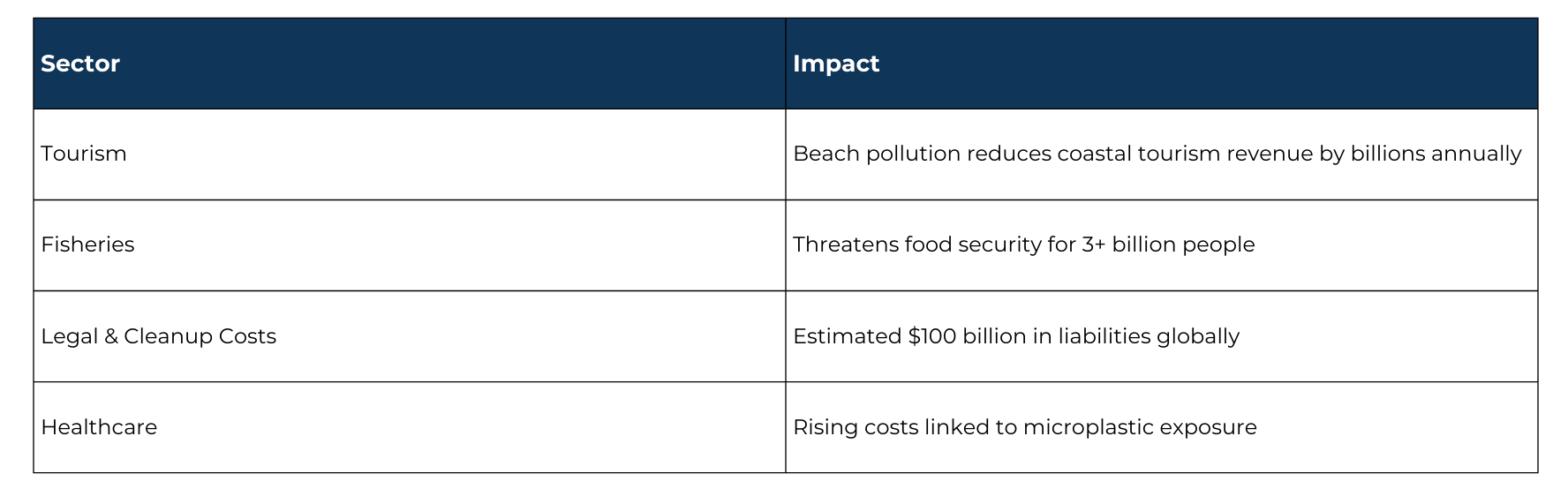
Marine plastic pollution inflicts billions in annual losses:
The economic case for intervention is clear: prevention and interception cost significantly less than long-term ecological and societal damage.
Innovators Leading the Way: Scalable Solutions Making Real Impact to reduce ocean plastic
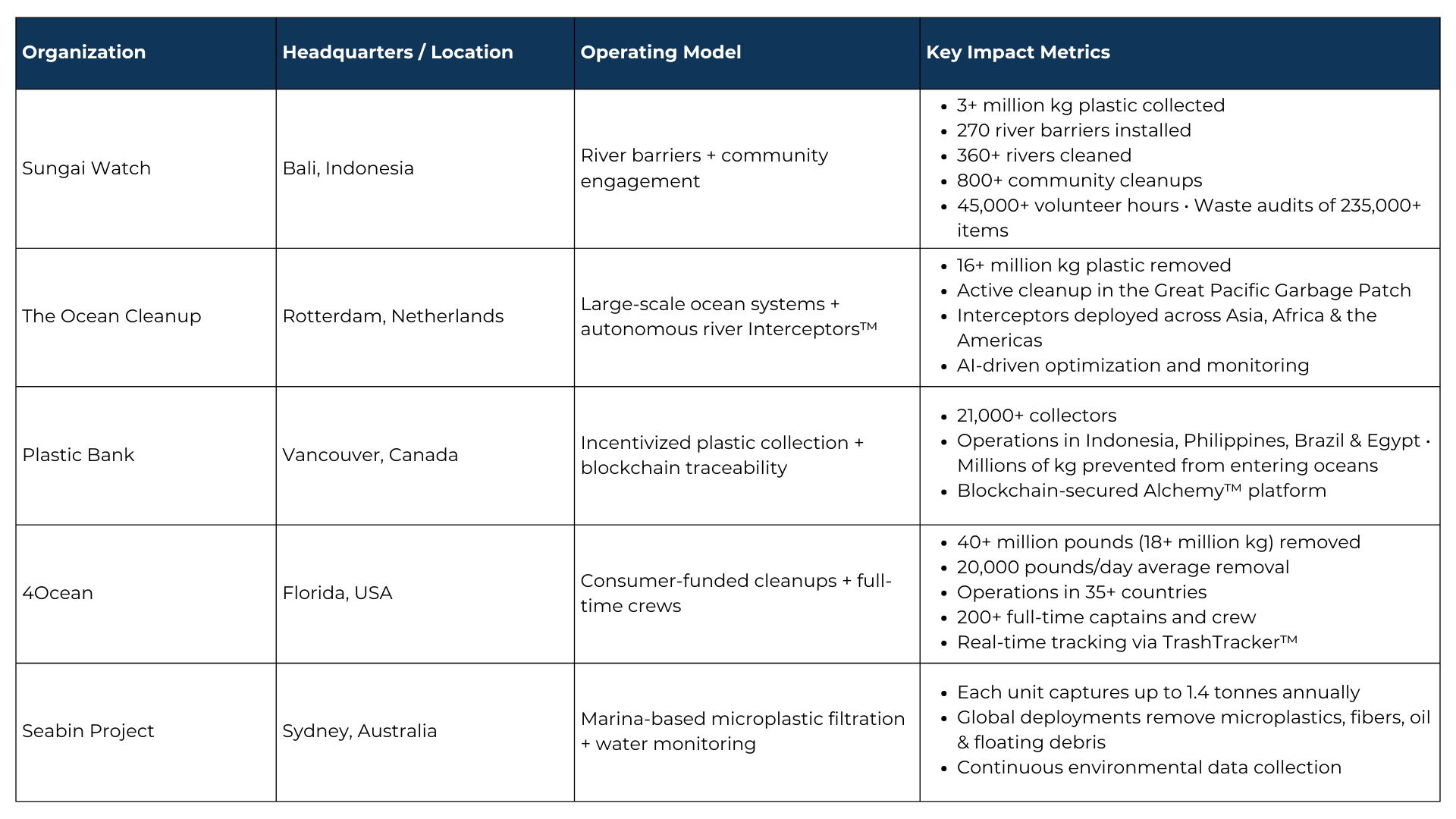
Despite the magnitude of the crisis, several organizations are demonstrating measurable, replicable models that reduce ocean plastic pollution at scale.
Founded by Gary, Kelly, and Sam Bencheghib, Sungai Watch represents one of the most effective examples of upstream intervention in the fight against ocean plastic pollution. By deploying low-cost river barriers combined with rigorous waste audits and strong community participation, the organization prevents plastic from ever reaching marine ecosystems. Its emphasis on data transparency, brand accountability, and local employment positions Sungai Watch as a scalable, prevention-first model for river-dense regions in Southeast Asia and beyond.
Founded by Boyan Slat, The Ocean Cleanup brings large-scale engineering solutions to one of the most complex environmental challenges of our time. Its dual focus on removing legacy plastic from ocean gyres while intercepting waste in the world’s most polluting rivers enables both remediation and prevention. Supported by advanced analytics and continuous system optimization, the organization has redefined what is technically possible in global marine cleanup efforts.
Plastic Bank, founded by David Katz and Shaun Frankson, addresses plastic pollution through a powerful socio-economic lens by transforming waste into a valuable commodity. By incentivizing collection through premium payments and leveraging blockchain-based traceability, the organization links environmental cleanup with poverty alleviation and financial inclusion. Its Social Plastic® model demonstrates how circular economy principles can be embedded directly into global supply chains.
Founded by Alex Schulze and Andrew Cooper, 4Ocean illustrates how consumer-driven business models can fund sustained, professional cleanup operations at scale. By employing full-time crews and maintaining year-round removal across high-risk marine ecosystems, 4Ocean bridges the gap between public engagement and operational impact. Its transparent reporting mechanisms further strengthen trust and accountability in environmental action.
Founded by Andrew “Pete” Ceglinski and Mikkel Juncker, the Seabin Project targets a critical and often overlooked dimension of ocean plastic pollution, microplastics in urban marinas and ports. Through floating filtration systems that also function as environmental monitoring tools, Seabin complements large-scale cleanup and river interception efforts. Its technology-driven approach provides valuable water-quality data while addressing pollution in controlled coastal environments.
Turning the Tide Through Collective Action
The ocean plastic crisis is vast, but not insurmountable. Sungai Watch, The Ocean Cleanup, Plastic Bank, 4Ocean, and Seabin Project demonstrate that innovative, data-backed solutions can significantly reduce pollution when scaled. What is needed now is coordinated global action, pairing infrastructure investment, community engagement, policy enforcement, and corporate responsibility.
Every minute, another truckload of plastic enters the ocean. But with strategic intervention and sustained commitment, we can ensure that every minute also brings progress toward cleaner, healthier, and more resilient oceans.
Blog by Asha Sridar, Manager, Frost & Sullivan Institute