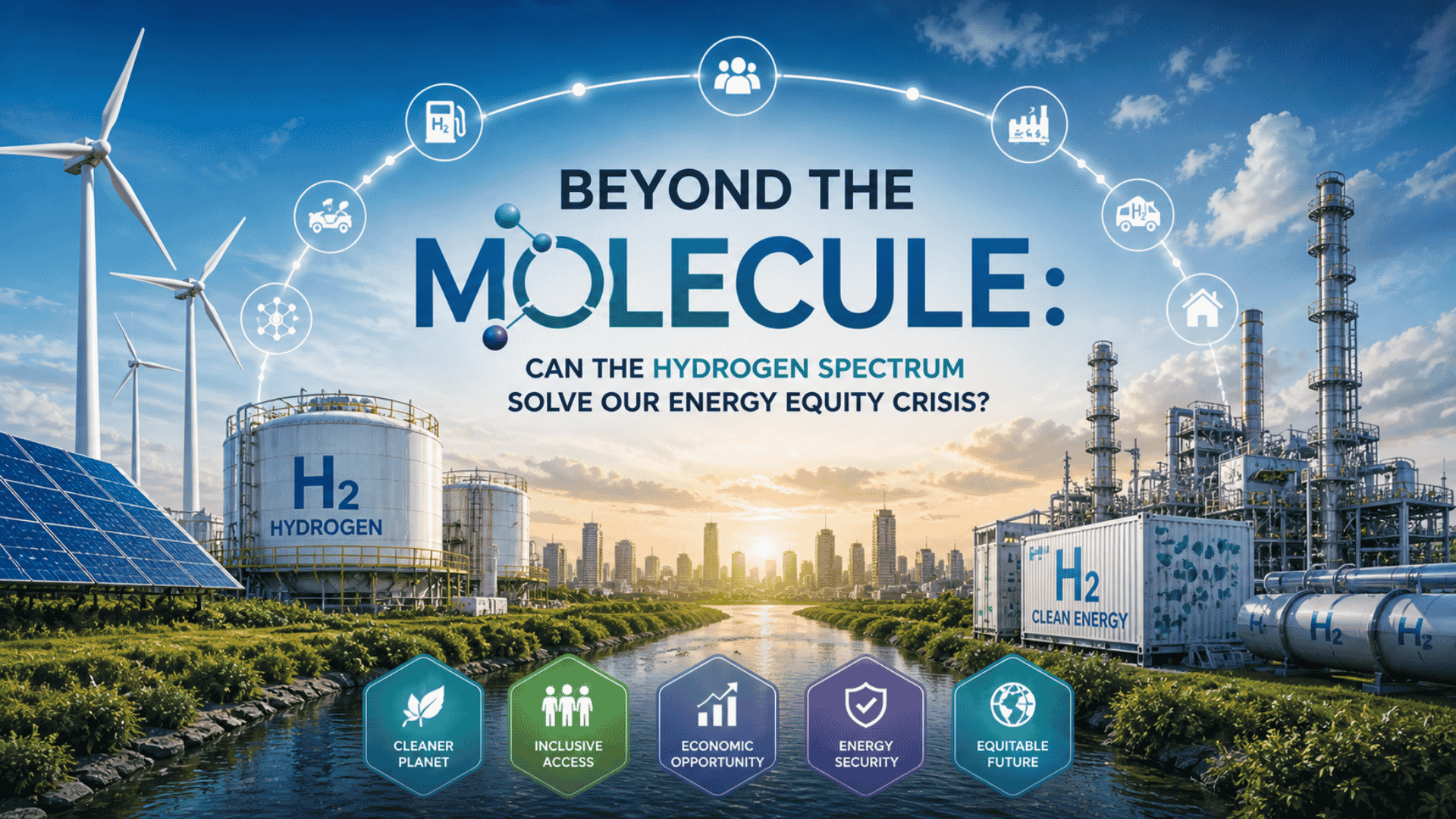
Over 95% of global hydrogen today is grey, produced from fossil gas, emitting 9–12 kg of CO₂ per kilogram of hydrogen, with pollution burdens falling disproportionately on low-income communities surrounding industrial plants. The global South produces less than 5% of the world’s hydrogen and cannot afford to import it at current prices. Meanwhile, sectors responsible for nearly 30% of global CO₂ emissions such as steel, shipping, ammonia, heavy industry that have no viable decarbonization pathway without it. Hydrogen is not optional. But its current form is inequitable, and scaling the wrong version of it will entrench that inequity for decades.
The colour of hydrogen determines not just its carbon footprint, but who gets access, and who bears the transition costs. Green hydrogen could turn solar-rich nations in the Global South into clean energy exporters for the first time. Blue hydrogen can protect livelihoods in fossil-dependent industrial regions by decarbonizing without dismantling existing infrastructure. Pink hydrogen offers baseload clean energy for nations with legacy nuclear assets. Grey hydrogen, left unregulated, continues to externalize its costs onto the communities least able to absorb them.
This report examines all four hydrogen pathways through the lens of Levelized Cost of Hydrogen (LCOH), projecting cost trajectories through 2030 and identifying the conditions under which each pathway becomes viable. The goal is not to declare a winner, but to provide a clearer picture of the trade-offs – economic, environmental, and social, that policymakers, investors, and communities will need to navigate in the years ahead.
Grey hydrogen: the burden we've inherited
Grey hydrogen is today’s default and its biggest problem. Produced from natural gas through steam methane reforming (SMR), it dominates global supply purely on cost. Over 95% of global hydrogen production is grey, releasing between 10 and 19 tonnes of CO₂ per tonne of hydrogen.
Blue hydrogen: a bridge, not a destination
Blue hydrogen applies carbon capture and storage (CCS) to the same natural gas process as grey, trapping emissions before they reach the atmosphere. It is the most realistic near-term option for heavy industry operating within existing gas infrastructure.
Green hydrogen: the goal the world is racing toward
Green hydrogen is produced by splitting water via electrolysis, powered entirely by renewable electricity like wind, solar, or hydro. No carbon is emitted anywhere in the process. Lifecycle assessments confirm emissions as low as 0.6 kg CO₂-equivalent per kilogram of hydrogen when wind power is used: roughly twenty times cleaner than grey.
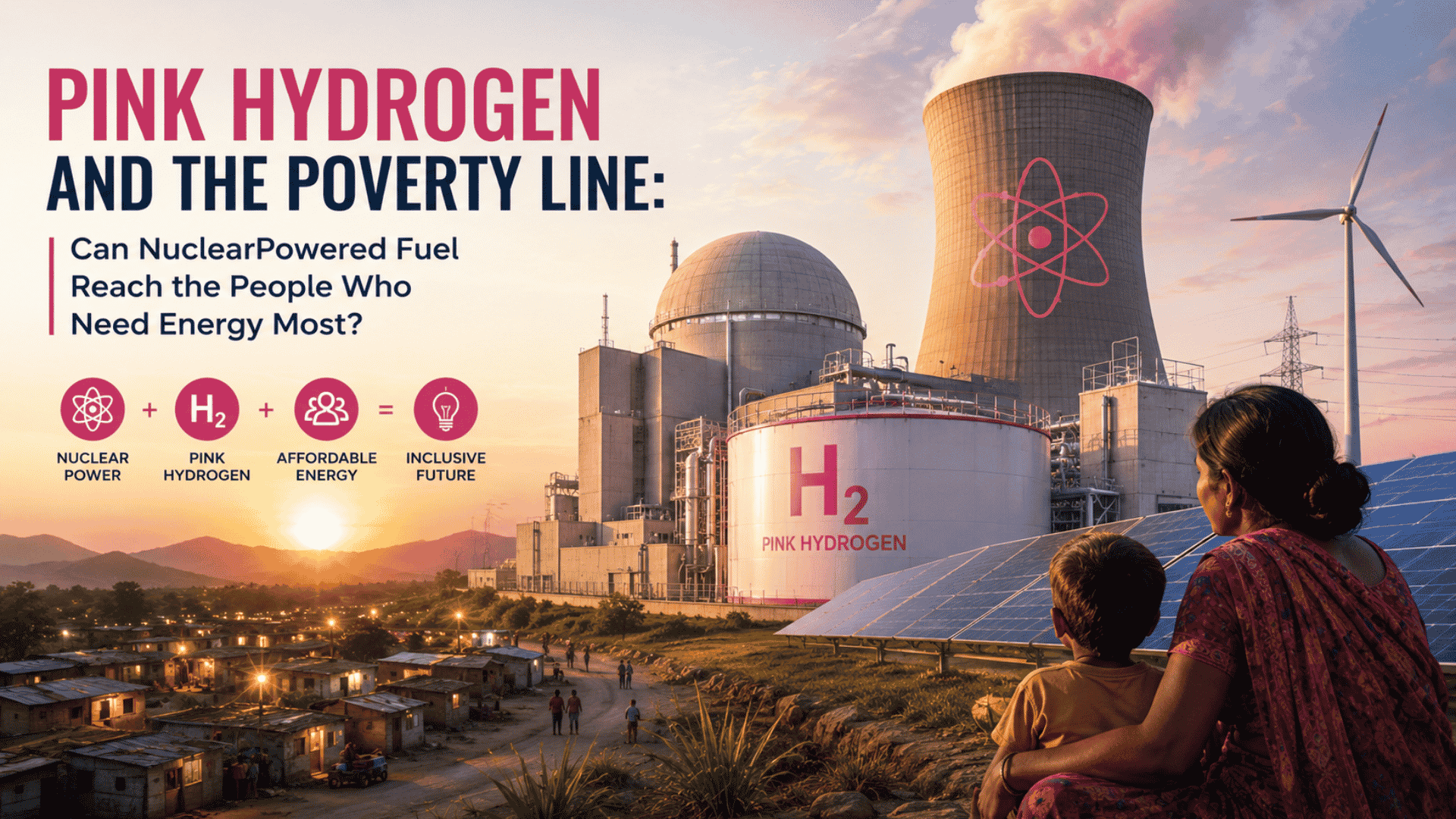
Pink hydrogen: the baseload clean alternative
Pink hydrogen uses the same electrolysis process as green hydrogen but is powered by nuclear electricity rather than renewables. Because nuclear plants generate electricity continuously, it can produce hydrogen at a steady, predictable rate which is a key advantage over weather-dependent renewables.