
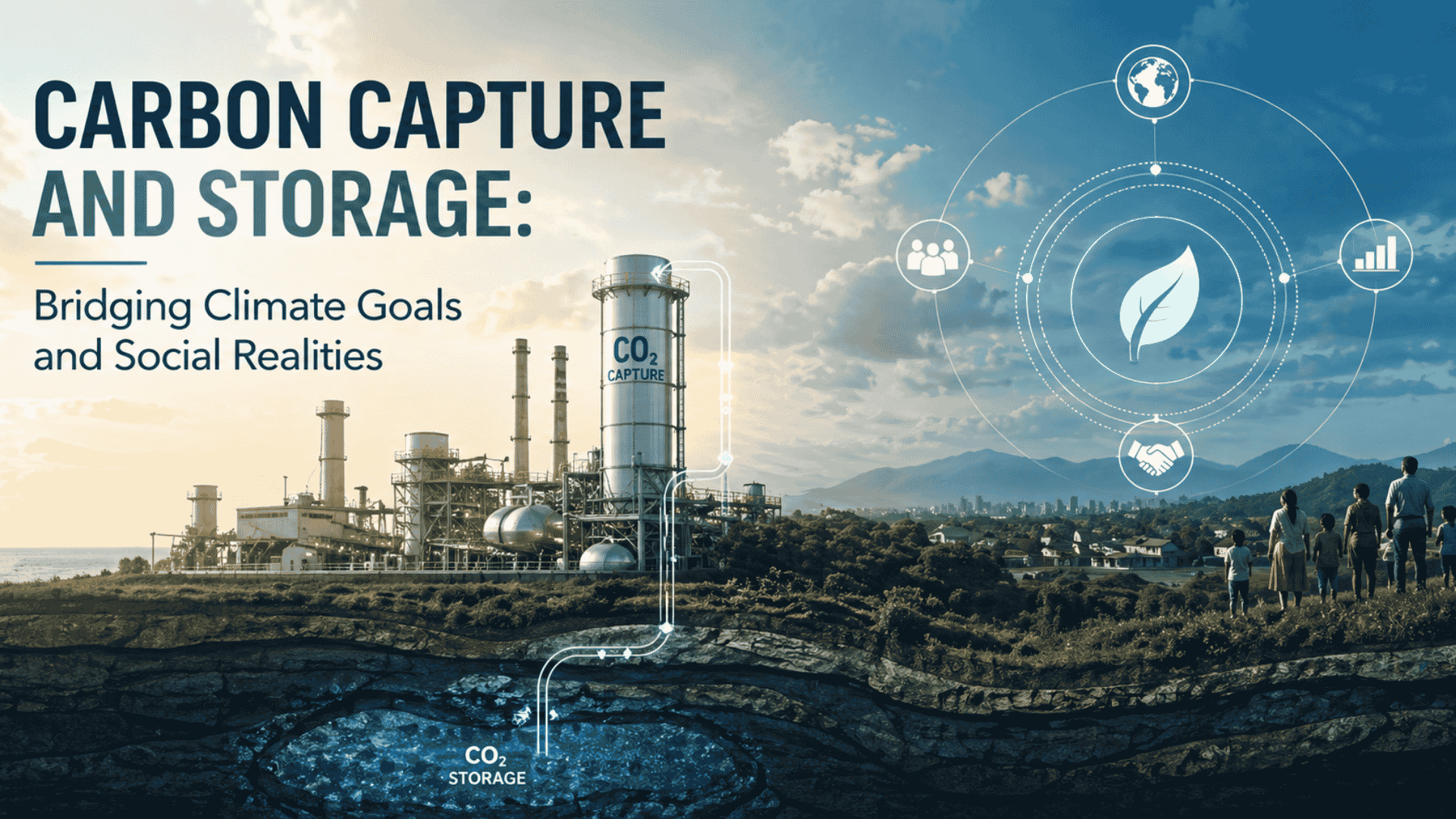
30 Apr Carbon Capture and Storage: Bridging Climate Goals and Social Realities
Climate change is no longer a distant threat, it is a lived reality shaping economies, communities, and ecosystems worldwide. Rising temperatures, extreme weather events, and air pollution are disproportionately affecting vulnerable populations, widening existing social and economic inequalities. In this context, Carbon Capture and Storage (CCS) has emerged as a critical, though often debated, solution in the global decarbonization toolkit. While much of the discourse around CCS focuses on technology and cost, its social implications such as who benefits, who bears the risks, and how it shapes communities, are equally important.
Why CCS Matters Now
The urgency to reduce greenhouse gas emissions has intensified as countries commit to net-zero targets. However, certain sectors such as cement, steel, and chemicals are inherently carbon-intensive and difficult to decarbonize through renewable energy alone. CCS provides a pathway to capture carbon dioxide emissions at the source and store them underground, preventing their release into the atmosphere.
From a strategic standpoint, CCS is not just about emissions reduction; it is about enabling a transition that is both practical and inclusive. Without CCS, industries that employ millions globally could face abrupt disruption, leading to job losses and economic instability in already vulnerable regions. Thus, CCS becomes a bridge, supporting industrial continuity while transitioning toward cleaner systems.
Environmental Impact: Promise and Trade-offs
At its core, CCS has clear environmental benefits. It can significantly reduce CO₂ emissions from large industrial sources and power plants. When implemented effectively, it contributes to slowing global warming and improving air quality.
However, CCS is not without environmental concerns. The process requires substantial energy, which can offset some of its benefits if not sourced sustainably. Additionally, long-term storage of carbon underground raises questions about leakage risks and monitoring. While current evidence suggests that well-managed storage sites are safe, public skepticism persists.
The Social Dimension: Equity, Trust, and Inclusion
The success of CCS is deeply tied to its social acceptance. Communities living near capture facilities or storage sites often express concerns about safety, land use, and environmental justice. Historically, industrial infrastructure has disproportionately impacted marginalized communities, leading to distrust.
For CCS to be viable, it must be implemented with transparency and community engagement at its core. This includes:
- Inclusive decision-making: Ensuring local communities have a voice in project planning
- Equitable distribution of benefits: Job creation, infrastructure development, and local investment
- Clear communication: Addressing fears around safety and environmental impact with accessible information
Without addressing these social factors, even the most advanced CCS technologies risk facing resistance and delays.
Economic and Employment Implications
From a socio-economic perspective, CCS has the potential to create new industries and job opportunities. Roles in engineering, monitoring, maintenance, and regulatory oversight can stimulate local economies. Importantly, CCS can also support a “just transition” by reskilling workers from fossil fuel industries rather than displacing them.
However, there is a risk that investments in CCS could divert resources from renewable energy or community-led climate solutions. Policymakers must strike a balance, ensuring CCS complements; not competes with broader sustainability goals.
Data Snapshot: Why CCS Is Significant
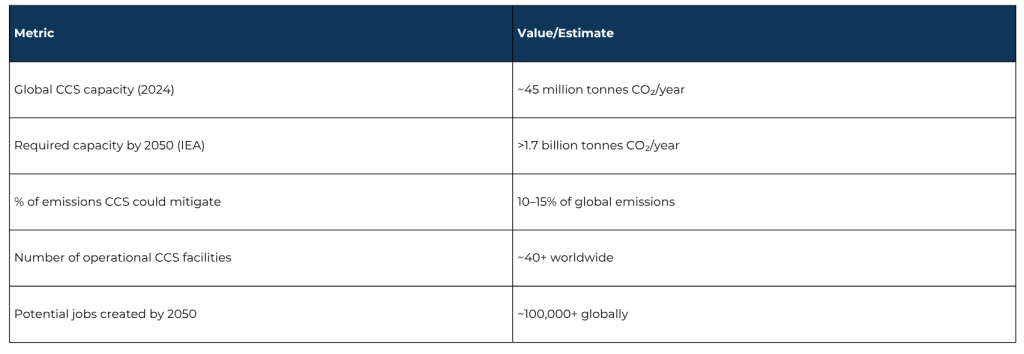
This gap between current and required capacity highlights both the urgency and the opportunity for scaling CCS responsibly.
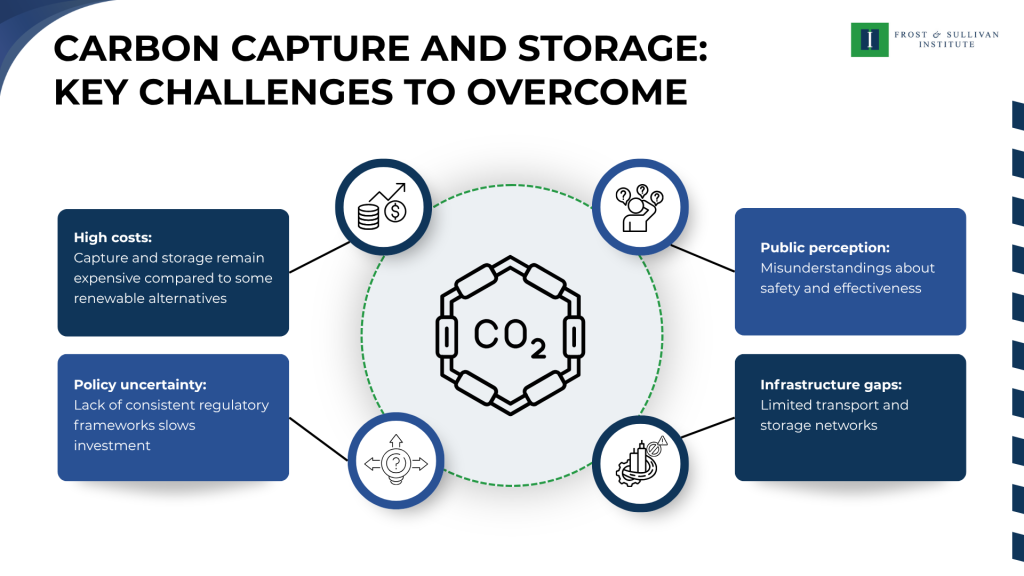
Addressing these challenges requires coordinated action across governments, industries, and communities.
Recommendations for Responsible CCS Deployment
Given its potential and complexities, CCS should be approached thoughtfully. The following best practices can help ensure it delivers both environmental and social value:
- Prioritize Hard-to-Abate Sectors
Focus CCS deployment where alternatives are limited, such as heavy industry, rather than using it to prolong fossil fuel dependency. - Embed Community Engagement Early
Engage local stakeholders from the outset, not as an afterthought. Build trust through transparency and shared decision-making. - Align with Renewable Energy
Power CCS operations with clean energy to maximize net environmental benefits. - Strengthen Policy and Incentives
Governments should provide clear regulatory frameworks, carbon pricing mechanisms, and financial incentives to accelerate adoption. - Invest in Monitoring and Safety
Robust monitoring systems and clear accountability measures are essential to ensure long-term storage integrity. - Support Workforce Transition
Develop training programs to help workers transition from traditional energy sectors into CCS and related industries.
Conclusion
Carbon Capture and Storage is not a silver bullet, but a necessary piece of the climate puzzle. Its true value lies not just in the tonnes of carbon it can store, but in how it is implemented. A socially conscious approach to CCS can help ensure that climate action does not come at the cost of community well-being or economic stability.
As the world navigates the complexities of decarbonization, CCS offers a pragmatic pathway, one that must be guided by equity, transparency, and long-term sustainability.
Blog by Asha Sridar,
Manager, Frost & Sullivan Institute