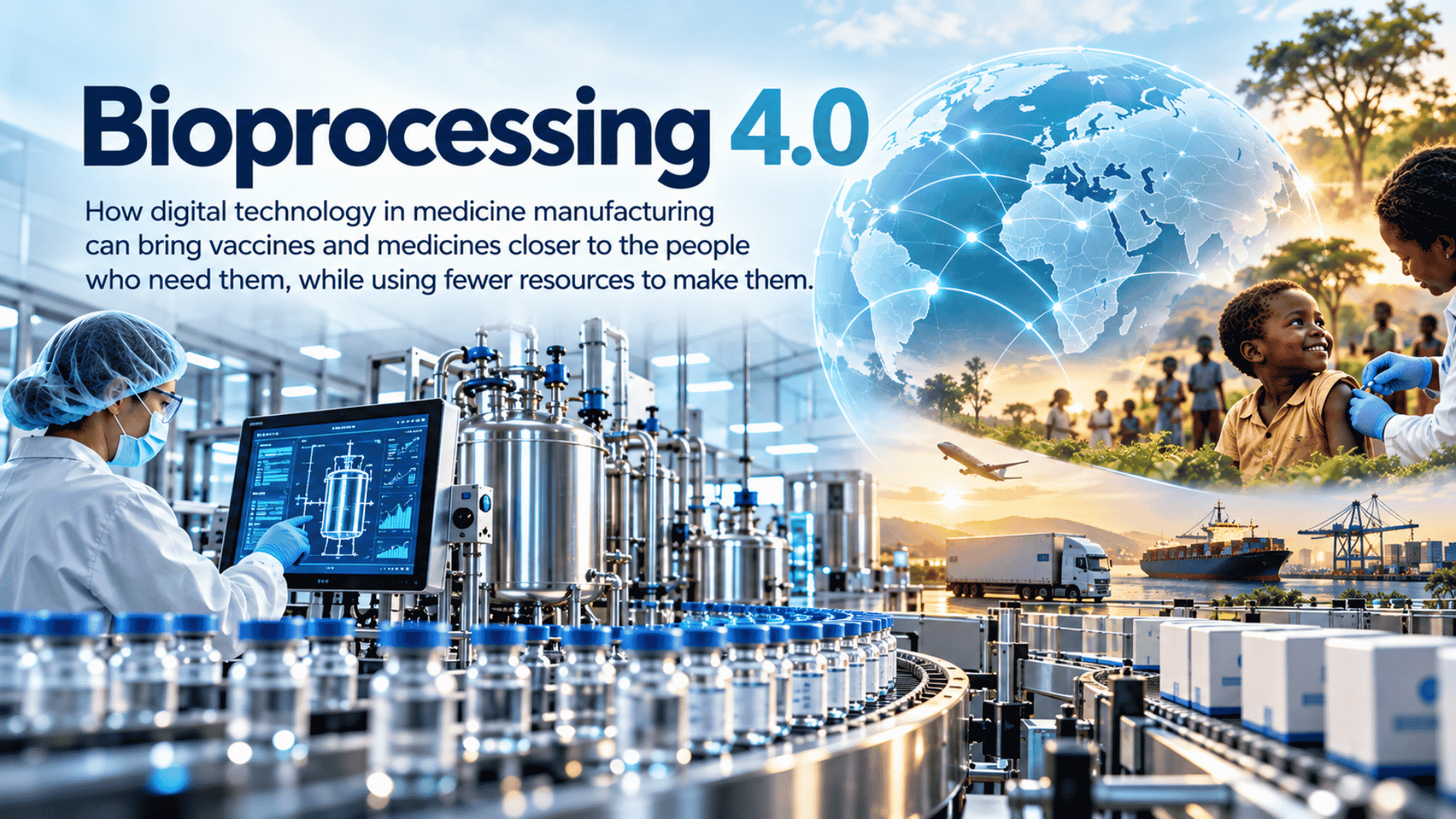
Bioprocessing is the use of living cells to make things the world depends on: vaccines, medicines, enzymes, biofuels and bio-based materials. For decades, this has been done in large batches, in a small number of countries, using methods that use a lot of energy, water and time. This paper looks at what happens when digital tools, such as sensors, artificial intelligence and automation, are added to this process. We call this combination Bioprocessing 4.0.
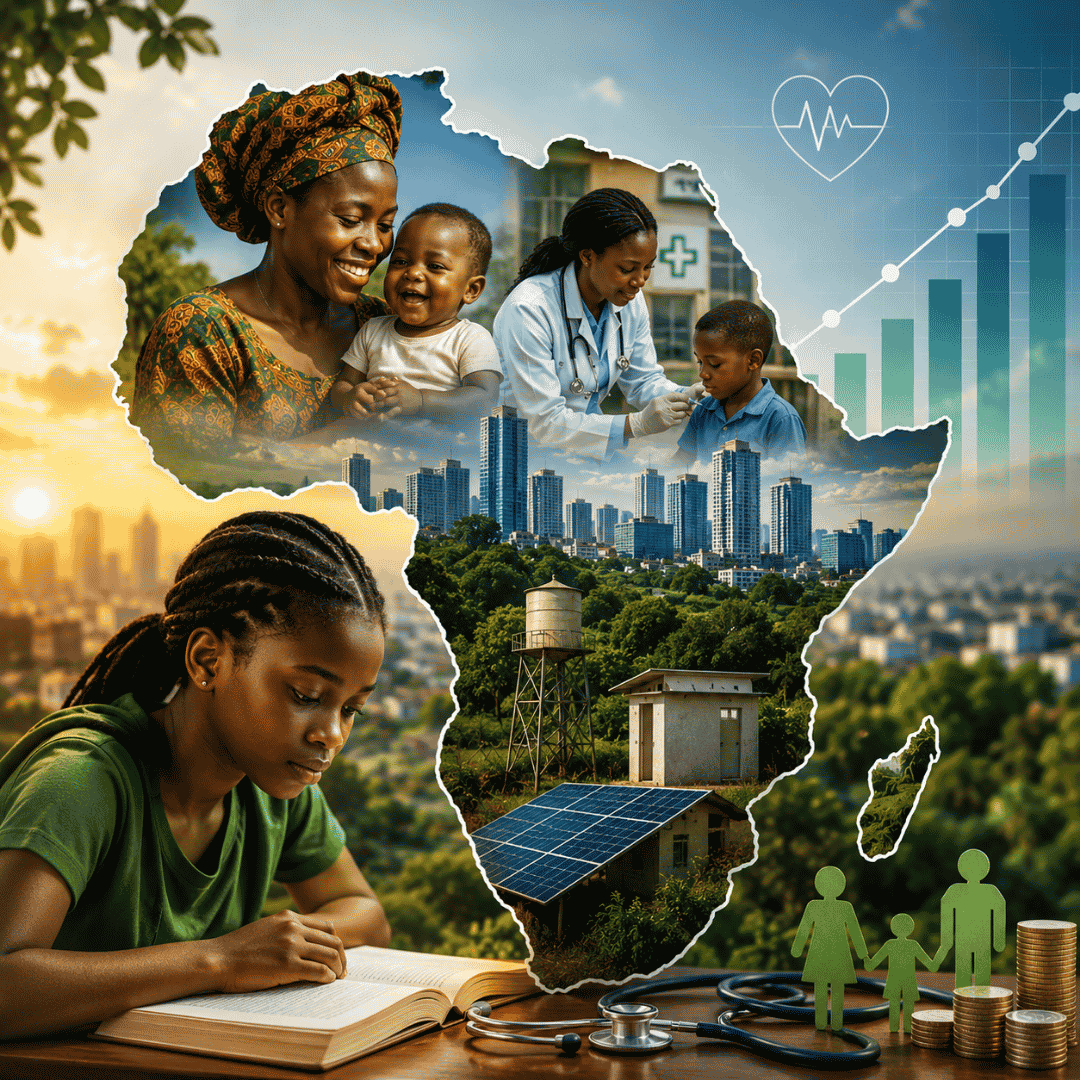
The title of this paper has three parts, and each one is simple once explained. “Transformational growth opportunity” means this is not just a small improvement; it is a real chance to do things differently and grow the industry in a better direction. “Health equity” means making sure medicines and vaccines reach people fairly, no matter where they live. “Sustainable industry” means making these products in a way that does not waste resources or harm the environment. The pandemic showed why this matters. Africa is home to about 18 percent of the world’s population, but it makes less than 1 percent of the vaccines it uses. When wealthier countries bought up most of the vaccine supply during COVID-19, poorer countries were left waiting. This paper argues that Bioprocessing 4.0, if used well, can help fix this kind of gap. It can also help make medicine manufacturing kinder to the environment. We looked at how these technologies work, studied a real example from Africa, and drew out a simple set of best practices. The paper ends with plain recommendations for manufacturers, governments, investors, and universities. The goal throughout is the same: show that better technology and fairer, cleaner manufacturing can go together, not against each other.
The Frost & Sullivan Institute works toward Innovation to Zero, a goal of zero disease, zero environmental damage, and zero unfair disparity, achieved through practical, scalable action. Bioprocessing sits right in the middle of two of these priorities, Healthcare and Environment, because how we make medicines decides both who can get them and how much damage is done to the planet in making them. This paper asks one simple question. Can we make the digital changes already happening in medicine manufacturing so that they close the gap between rich and poor regions, instead of making it wider?