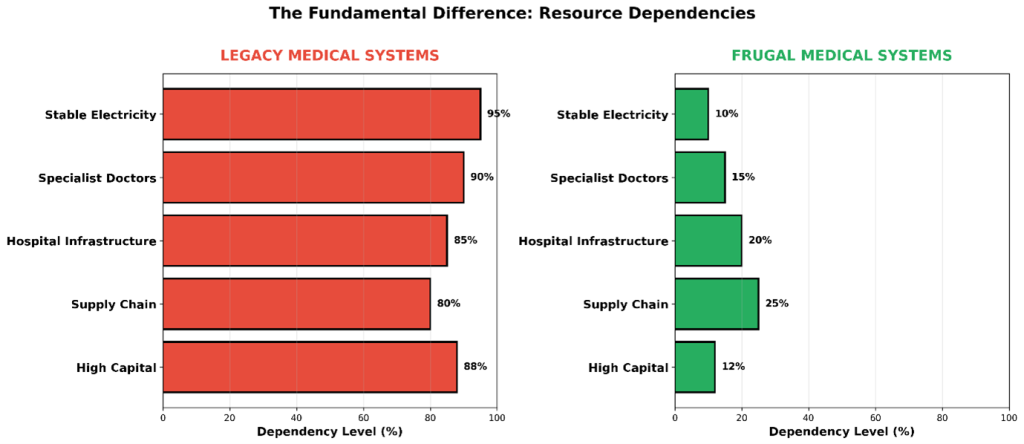
For decades, medical innovation has been defined by technological sophistication such as advanced imaging, robotic precision, and specialist-dependent diagnostics designed for infrastructure-rich health systems. While these advances have improved outcomes in high-income markets, they have also reinforced a structural mismatch between global health needs and the technologies designed to serve them.
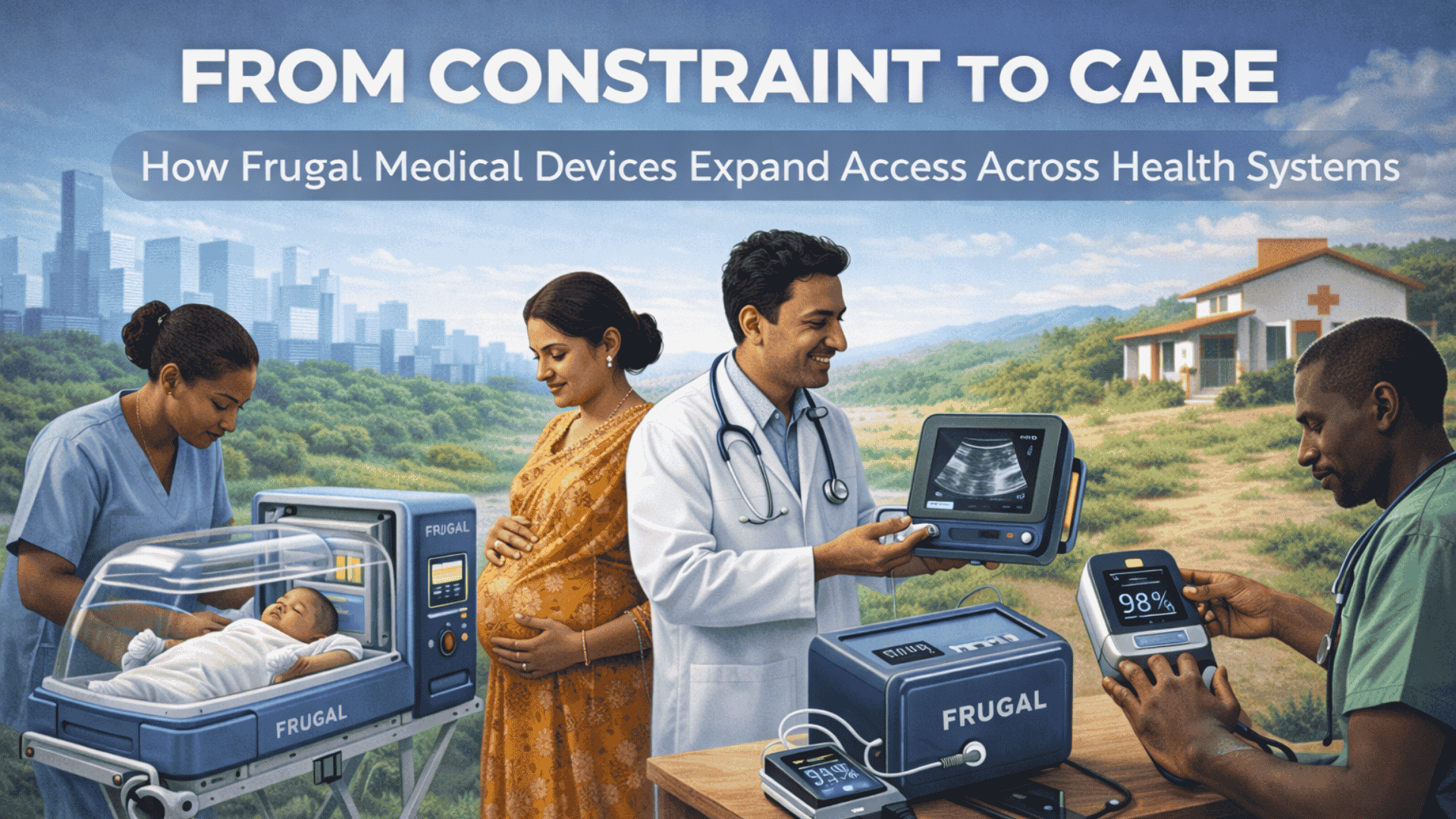
As of 2026, a counter-trend is gaining a strategic momentum. Across low- and middle-income countries (LMICs), innovators are redesigning medical devices around constraint rather than abundance. The result is a growing class of frugal medical technologies that deliver clinically meaningful outcomes without relying on stable electricity, specialist labour, or fragile supply chains.
For global health systems, these devices are not marginal substitutes. They represent a scalable blueprint for resilient care delivery, increasingly outperforming legacy models on social return on investment (SROI).
Closing the Infrastructure Alignment Gap
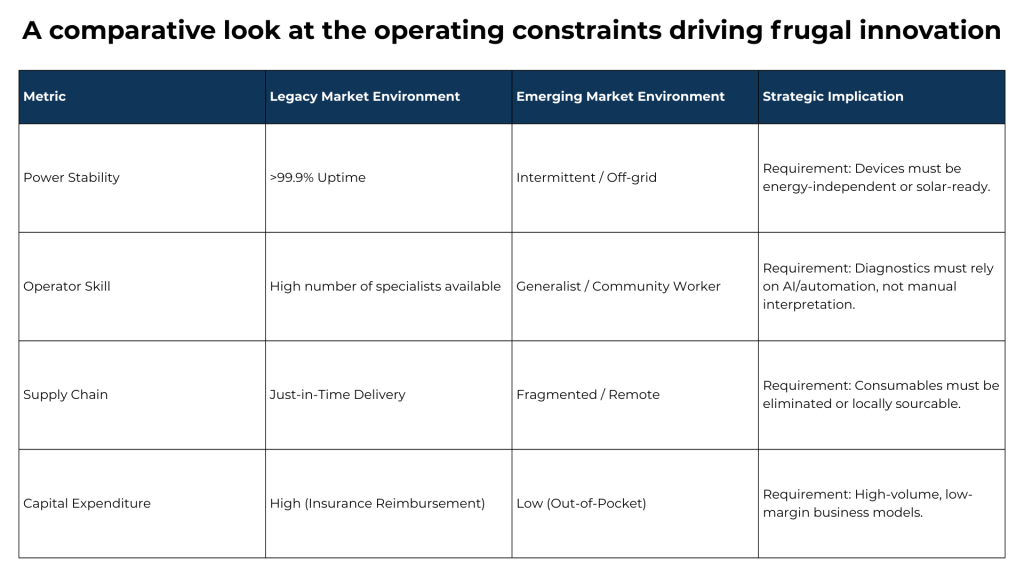
Table 1: The Resource Divergence
Source:World Health Organization (WHO) & World Bank, Medical & Biological Engineering & Computing Journal; WHO Medical Device Donations Guidelines, World Bank Open Data & WHO Global Health Expenditure Database.
These constraints are not barriers to innovation; they are its primary design inputs.
Key Challenges to Widespread Adoption: Policy and Market Implications
Scaling frugal medical devices from pilot initiatives to national health system standards is less a question of technological readiness and more a question of systemic alignment. While many frugal innovations have demonstrated clinical efficacy and cost efficiency, their adoption at scale remains constrained by policy, financing, and market structures originally designed for capital-intensive, hospital-centric technologies. Three structural challenges are particularly significant……………………………………….