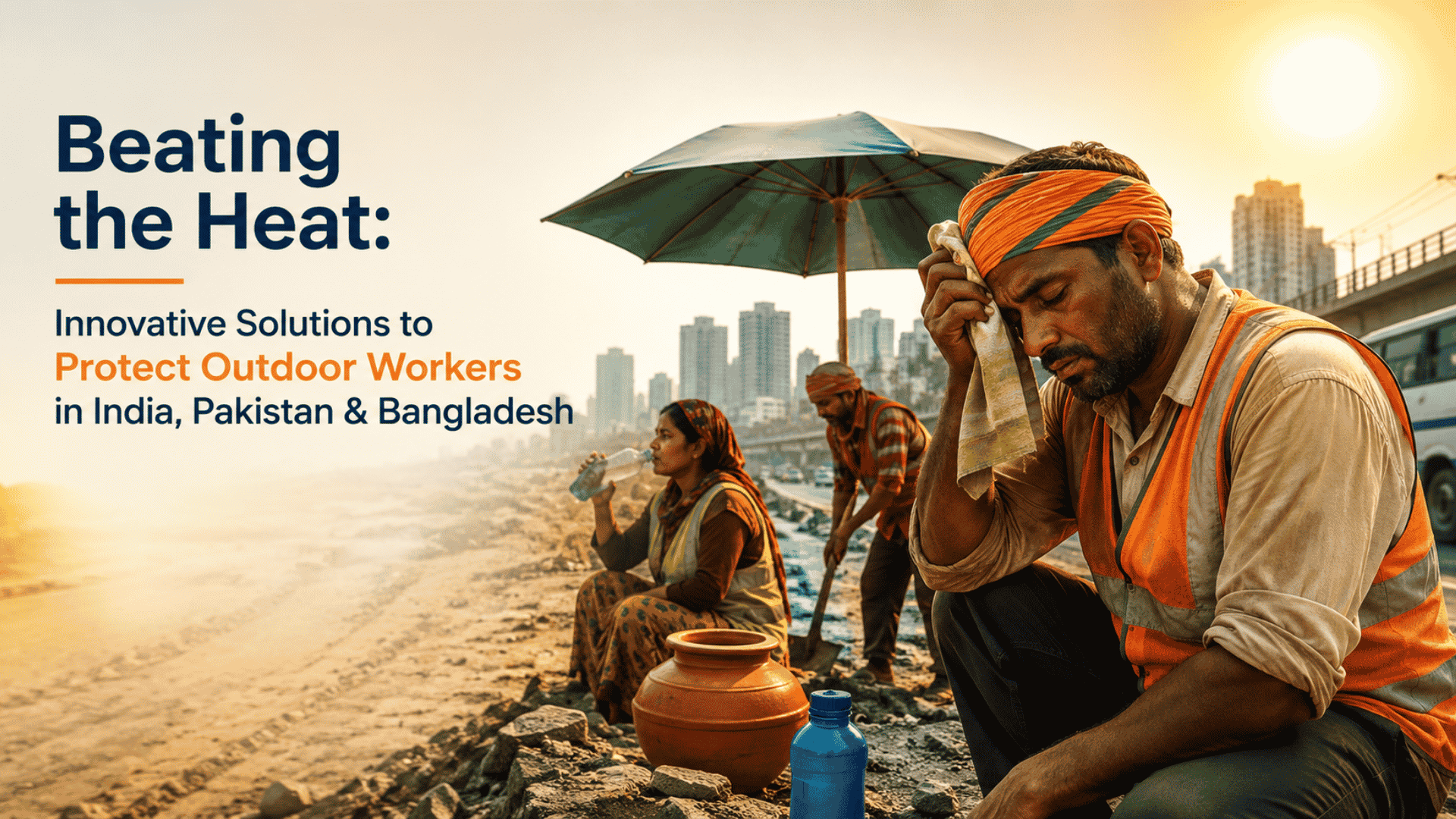
For decades, global warming was viewed as a distant environmental abstract. Today, it stands as an immediate, structural constraint on global economic performance. As rising greenhouse gas emissions trap solar radiation, the planet is experiencing an unprecedented surge in extreme heatwaves.
Public healthcare is the state’s promise to protect citizens’ health. Government spending on clinics, hospitals, and prevention not only treats illness but keeps society productive. While some emerging economies have successfully institutionalised equitable access, others, like India, continue to face structural bottlenecks that limit outcomes despite growth.
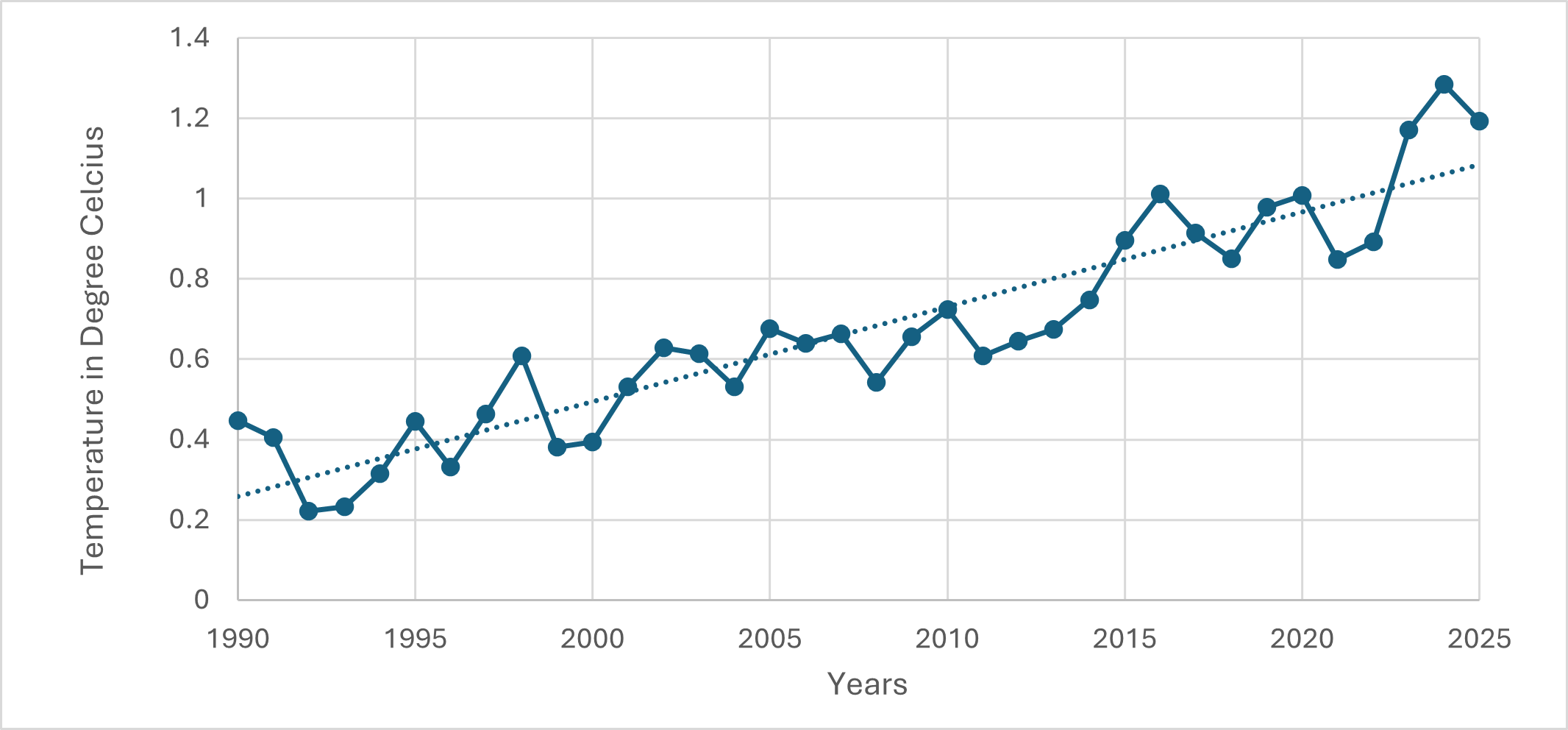
The graph shows a clear long-term increase in global temperatures from 1990 to 2025, despite short-term fluctuations. Temperatures rise more rapidly after 2015, with recent years exceeding 1.0°C above earlier averages. NASA reports that the last decade was the hottest on record, with 2024 at +1.29 °C above mid-20th-century averages.
When intense ambient temperatures pair with high relative humidity, they breach the boundaries of human biology. The human body relies on evaporative cooling to maintain internal equilibrium; when this mechanism fails due to ambient heat stress, cognitive function drops, physical fatigue accelerates, and labor velocity contracts.
On a macro scale, this thermal tax systematically erodes labor productivity. The International Labour Organization (ILO) projects that even under a strict 1.5°C warming pathway, extreme heat will strip away 2.2% of total working hours worldwide by 2030, an annual macroeconomic toll of $2.4 trillion, or the permanent loss of 80 million full-time jobs
The Epicenter: South Asia’s Triple-Engine Crisis
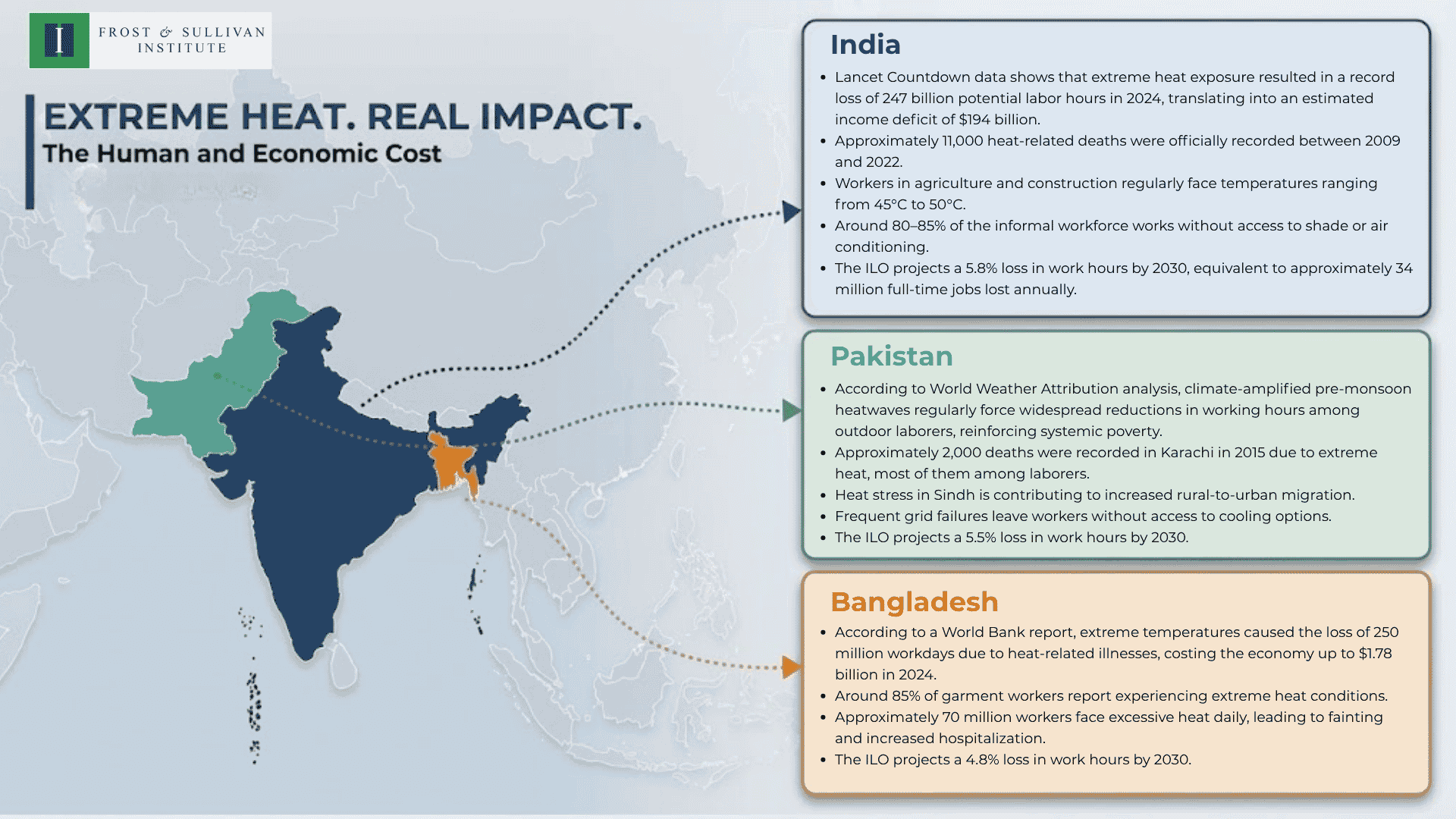
While no continent is immune to this “umbrella threat,” the South Asian subcontinent stands at the ultimate global epicenter. The crisis acts as an equal-opportunity disruptor, directly targeting the region’s core manufacturing and agricultural engines, i.e., India, Pakistan, and Bangladesh, where hundreds of millions rely on daily-wage, open-air physical labor.
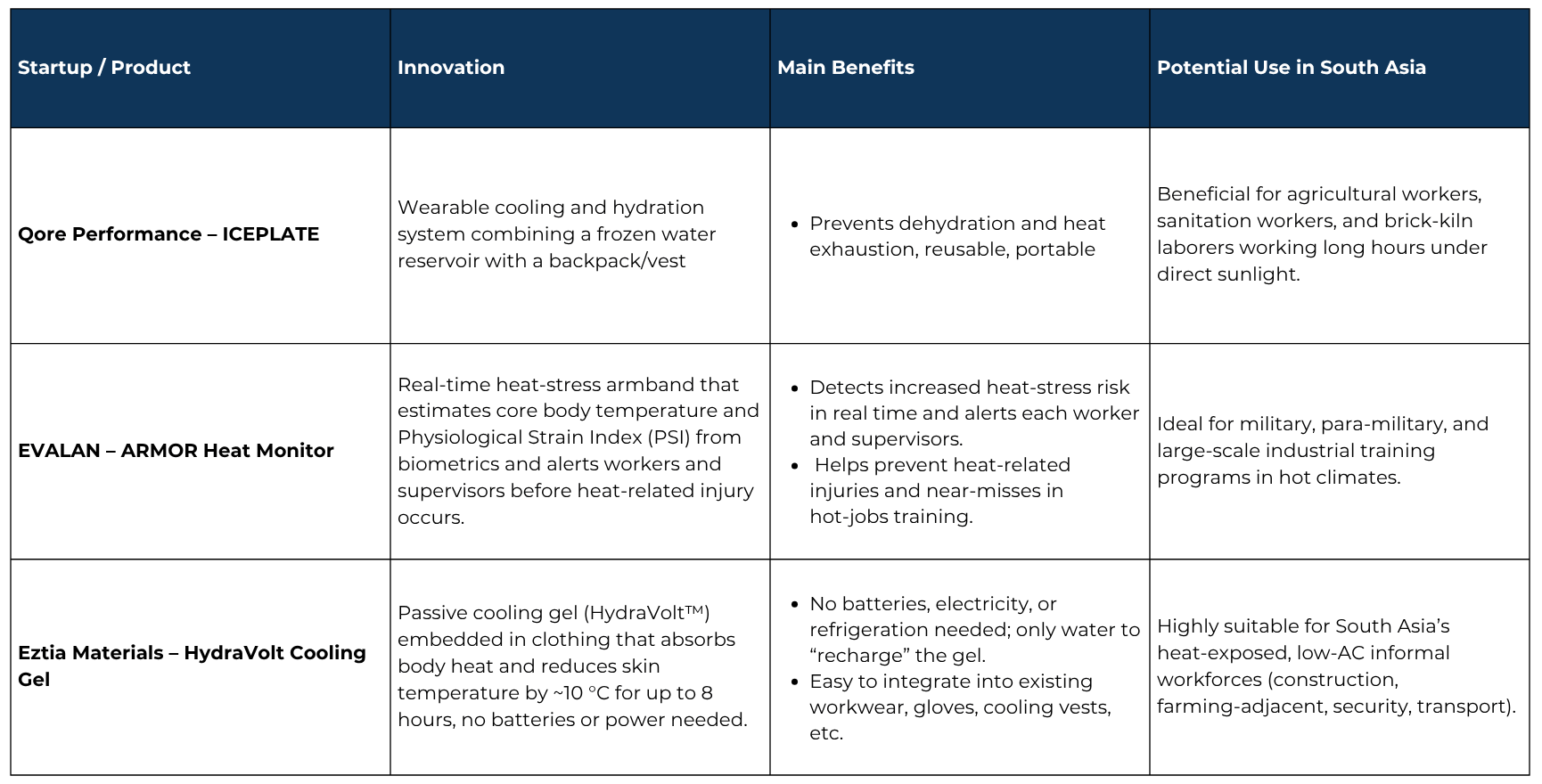
Innovative Anti-Heat Solutions for Outdoor Laborers
Governments in India, Pakistan, and Bangladesh can enhance worker safety by offering subsidies, tax incentives, or public-private partnerships to promote the adoption of anti-heat technologies, such as cooling wearables, hydration systems, and smart heat-monitoring devices. Priority support can be given to sectors with high outdoor labor exposure, including agriculture, construction, sanitation, and manufacturing. Such initiatives can help reduce heat-related deaths, productivity losses, healthcare costs, and long-term economic damage caused by extreme heat.
Conclusion
Addressing heat stress will be crucial to protecting livelihoods and sustaining economic growth in countries such as India, Pakistan, Bangladesh, and other heat-vulnerable regions. Scalable innovation, supported through strong government and private-sector collaboration, can help create safer and more climate-resilient working conditions for millions of outdoor laborers. Early investment in adaptive solutions today will play a key role in reducing future social, health, and economic risks caused by rising temperatures.
Looking ahead, India’s demographic and economic trajectory will increasingly depend on the health of its workforce. As the country aspires toward becoming a $5 trillion economy, healthcare must shift from being treated as a welfare expense to a core pillar of economic strategy. The opportunity is clear: with the right structural reforms, India can transition from fragmented delivery to a resilient, productivity-enhancing healthcare system.
Blog by Samyuktha Purusothaman Nair, Research Analyst, Frost & Sullivan Institute