Our food system feeds eight billion people, but it also quietly fuels the climate crisis. From the paddy fields of Southeast Asia to the cold storage chains of European supermarkets, the way we grow, process, and consume food is one of the single largest drivers of global greenhouse gas (GHG) emissions. The good news? A new generation of startups is rewriting the rules.
The Scale of the Problem
According to the UN Food and Agriculture Organization (FAO), agrifood systems account for about one-third of all human-caused greenhouse gas emissions, reaching 16.5 billion tonnes of CO₂ equivalent (Gt CO₂eq) in 2023, a 21% increase since 2001.
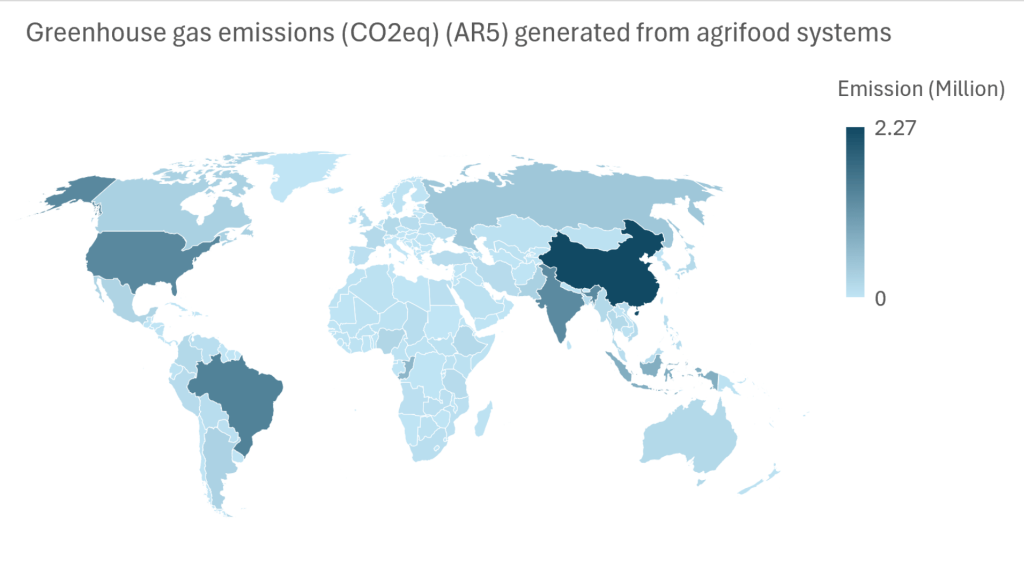
Fig 1: Greenhouse gas emissions (CO2eq) (AR5) generated from agrifood systems
The map shows that Agrifood-related greenhouse gas emissions are highest in China, India, Brazil, and the United States, indicating the significant impact of large-scale agricultural production and food systems in these countries. In contrast, most countries in Africa, Europe and Oceania contribute relatively lower emissions, as reflected by the lighter shades on the map.
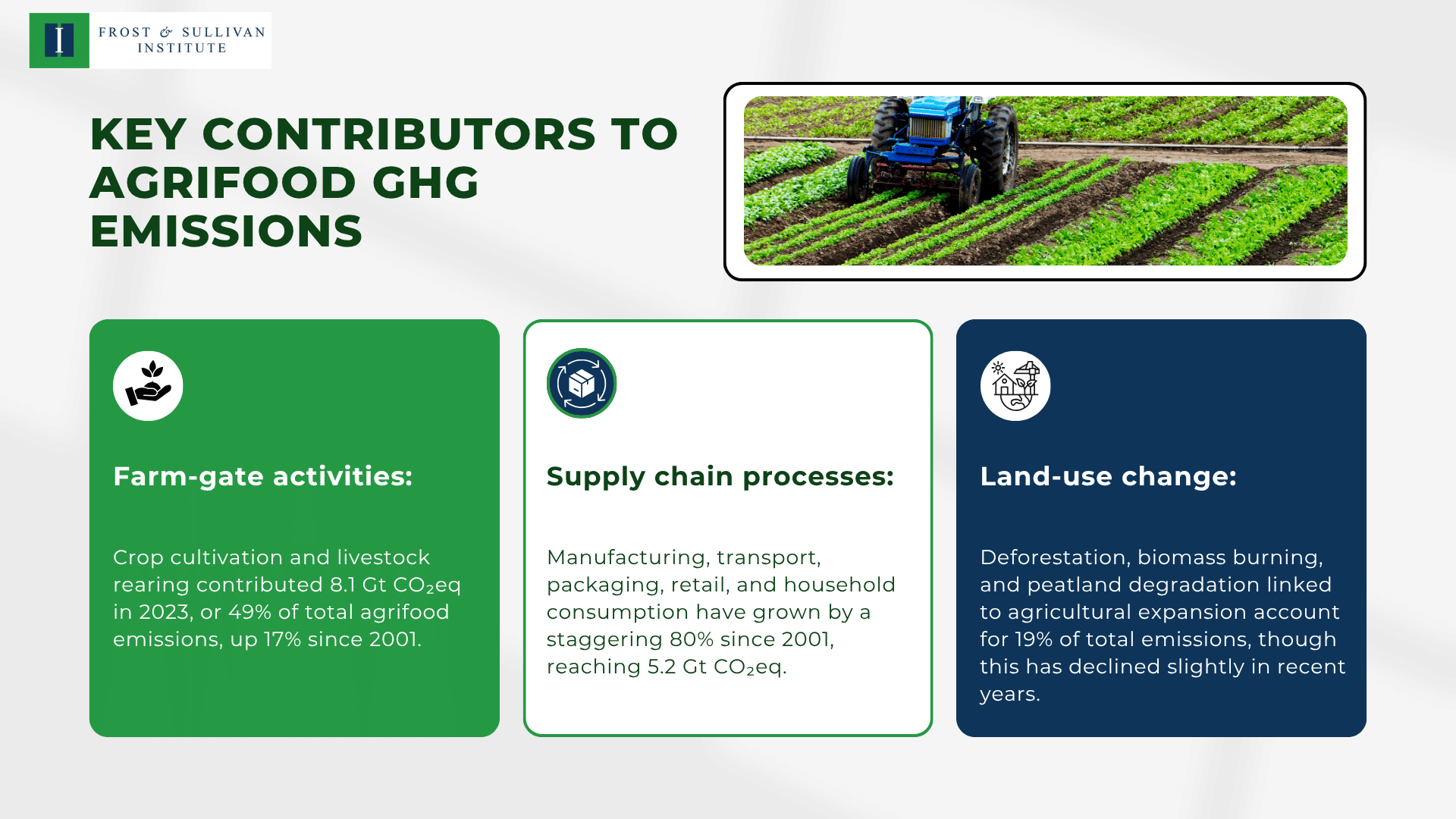
These emissions fall across three broad zones:
Livestock alone is a dominant force. Farm-gate livestock emissions contributed around 54% of farm-gate GHG emissions across the same period. Methane, primarily from enteric fermentation in ruminants, is responsible for approximately 50% of agricultural emissions in CO₂ equivalent, making it one of the most potent near-term climate levers. Synthetic nitrogen fertilizers are the leading driver of crop-related emissions, accounting for 55% of crop emissions globally.
Without transforming how we produce and distribute food, meeting the 1.5°C Paris climate target is simply impossible. Even if all other sectors reached zero emissions, food consumption alone could push global temperatures up by nearly 1°C by the end of this century.
7 Startups Rewriting Agrifood’s Carbon Story
Entrepreneurs across the agrifood value chain are deploying precision technology, biotechnology, circular economy models, and AI to slash emissions without compromising yields. Here are seven verified standout companies:
Rumin8 (Australia) has developed a synthetic feed supplement that replicates the methane-inhibiting compound bromoform, which occurs naturally in red seaweed (Asparagopsis). Independent trials show its products can reduce livestock methane emissions by up to 95%. The startup has received regulatory approvals to progress commercial trials in New Zealand and Brazil and is backed by Bill Gates’s Breakthrough Energy Ventures.
Pivot Bio (USA) engineers naturally occurring soil microbes to fix atmospheric nitrogen directly at crop roots, reducing dependence on synthetic nitrogen fertilizers. Its flagship product, PROVEN 40, lets corn growers displace up to 40 pounds of synthetic nitrogen per acre, and by 2022 it was deployed on over 3 million US acres.
Indigo Agriculture’s (USA) carbon marketplace pays farmers to adopt regenerative practices including cover cropping and no-till farming, and has already surpassed 2 million metric tons of verified soil carbon removals. In January 2026, Indigo signed one of the largest soil carbon deals to date, a 12-year agreement with Microsoft for 2.85 million credits.
Biocode (Finland) has built an online life-cycle assessment (LCA) platform that enables food companies to calculate, track, and report the carbon footprint of their products and corporate Scope 1–3 emissions in line with the GHG Protocol and IPCC guidelines. The platform serves food brands, producers, and farmers, and won the top spot at the TONIC Summit 2023 pitching competition.
Umuntu Agrobiotics (Uganda) produces low-cost, chemical-free microbial solutions that improve soil health while actively cutting agricultural GHG emissions, a scalable model of climate innovation from the Global South.
Mi Terro (USA)converts agricultural waste such as rice straw and fruit skins into biodegradable biomaterials and packaging, replacing petrochemical plastics with carbon-neutral alternatives and creating value from farm side streams.
SOSBio (USA)has developed ecoNPK, an organic-blend performance fertilizer rich in humates, natural sugars, and microelements that release nutrients adaptively, reducing the excess nitrogen application responsible for nitrous oxide emissions while maintaining yields.
The Path Forward
The World Bank’s 2024 flagship report, Recipe for a Livable Planet: Achieving Net Zero Emissions in the Agrifood System, confirms that affordable, impactful solutions already exist; what’s missing is speed of adoption and enabling policy across high-, middle-, and low-income countries. The agtech sector attracted $5.7 billion in venture capital in 2024 alone, signaling investor confidence in food-system transformation.
Feeding the planet sustainably isn’t a utopian idea; it’s an engineering problem being solved, one startup at a time. The only question left is whether we scale these solutions fast enough.
Blog by Samyuktha Purusothaman Nair, Research Analyst, Frost & Sullivan Institute