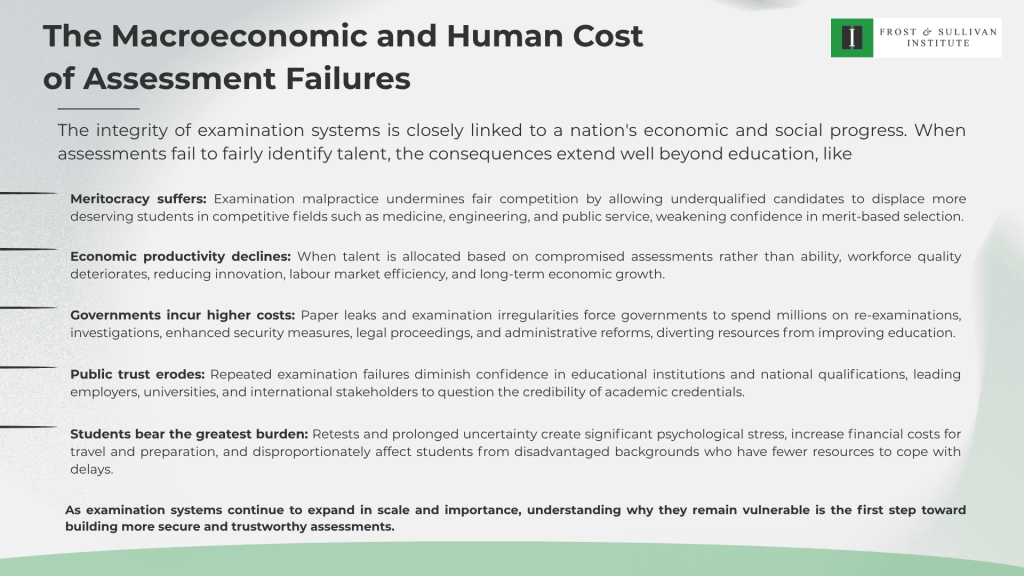
Every year, millions of students compete in high-stakes examinations that determine access to higher education, professional careers, and skilled employment. These assessments serve as gateways to opportunity, shaping not only individual futures but also the quality of a nation’s workforce and long-term economic competitiveness. Yet when examination systems fail through paper leaks, organized malpractice, or weak governance, the consequences extend far beyond classrooms. They erode public trust, weaken merit-based selection, and undermine one of a country’s most valuable assets, its human capital. As economies become increasingly knowledge-driven, safeguarding examination integrity has emerged as a strategic governance imperative rather than merely an educational concern.
The Scale of the Challenge
In India, where 2.4 million candidates scramble for roughly 55,000 affordable medical seats, investigations by The Wire revealed 220 exam fraud cases between 2005 and 2026, with paper leaks surging to 70% of all fraud post-2015. Criminal cartels monetize these breaches by selling question papers for up to ₹50 lakh ($60,000 USD). Internationally, the scale of this problem is equally alarming: Bangladesh suffered over a decade of systematic paper leaks affecting 30 national civil service and academic exams, while Egypt’sThanaweya Amma exit exams, lakhs of students were repeatedly compromised by instant social media leaks. Similarly, South Korea’s Suneung sees over 5,00,000 candidates victimized by illicit cram-school networks buying test items, and China’sGaokao faces organized cheating targeting 13 million applicants annually.
The human impact of this systemic corruption is tragic. India’s National Crime Records Bureau data shows 12,598 youth suicides linked to exam failure between 2019 and 2024, averaging nearly six lives lost daily. When paper leaks replace merit with money, they inflict severe psychological trauma, waste years of student effort, and destroy public faith in educational systems globally.
Why Do Examination Systems Fail?
Examination failures rarely result from a single breach. Instead, they emerge from weaknesses across the assessment ecosystem.
Physical Logistics Vulnerabilities: Centralized paper handling creates multiple physical attack vectors across printing, transit, and exam center storage.
Cybersecurity and Insider Threats: Weak digital security, compromised personnel, and organized cheating networks allow unauthorized actors to extract and sell test content across social platforms.
Governance and Accountability Deficits: Non-transparent administrative oversight and minimal institutional accountability fail to prevent corruption or enforce strict chain-of-custody protocols.
High-Stakes Single-Test Dependency: Heavy reliance on single, high-stakes terminal examinations creates massive financial incentives for illicit networks to compromise the system.
These systemic vulnerabilities highlight that examination security is not merely a technological or administrative issue, but fundamentally one of institutional governance.
Conclusion
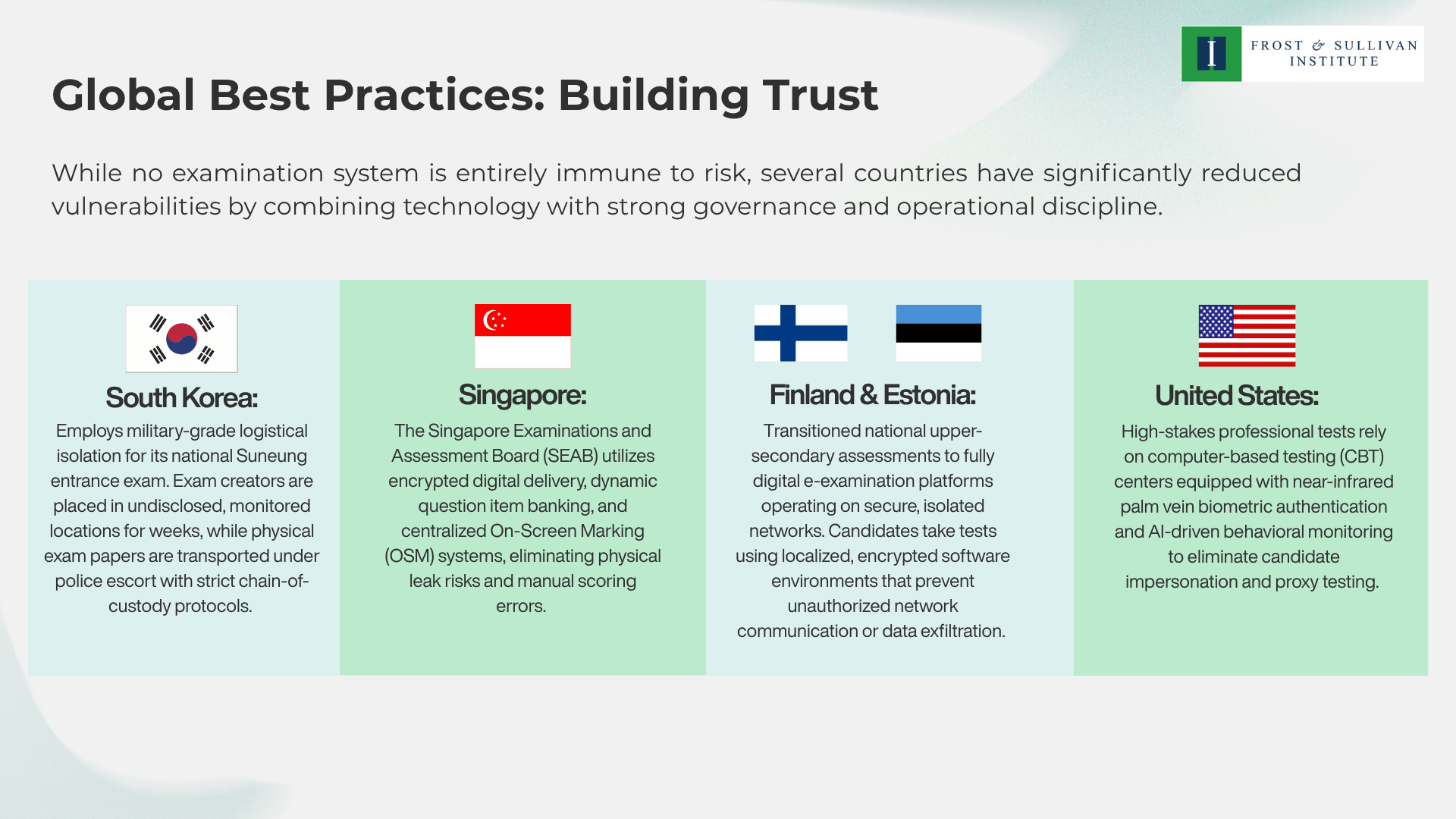
Examination integrity is fundamental to building future-ready workforces. Protecting exam systems is not just about preventing leaks, it is about protecting human capital and opportunity. Countries that treat secure, transparent assessments as strategic infrastructure (on par with cybersecurity for banking or telecoms) will benefit from higher-quality graduates, stronger investor confidence, and social stability. In a knowledge-driven global economy, the real test is not just how students perform, but how effectively institutions protect the integrity of the opportunities they create.
Blog by Samyuktha Purusothaman Nair, Research Analyst, Frost & Sullivan Institute