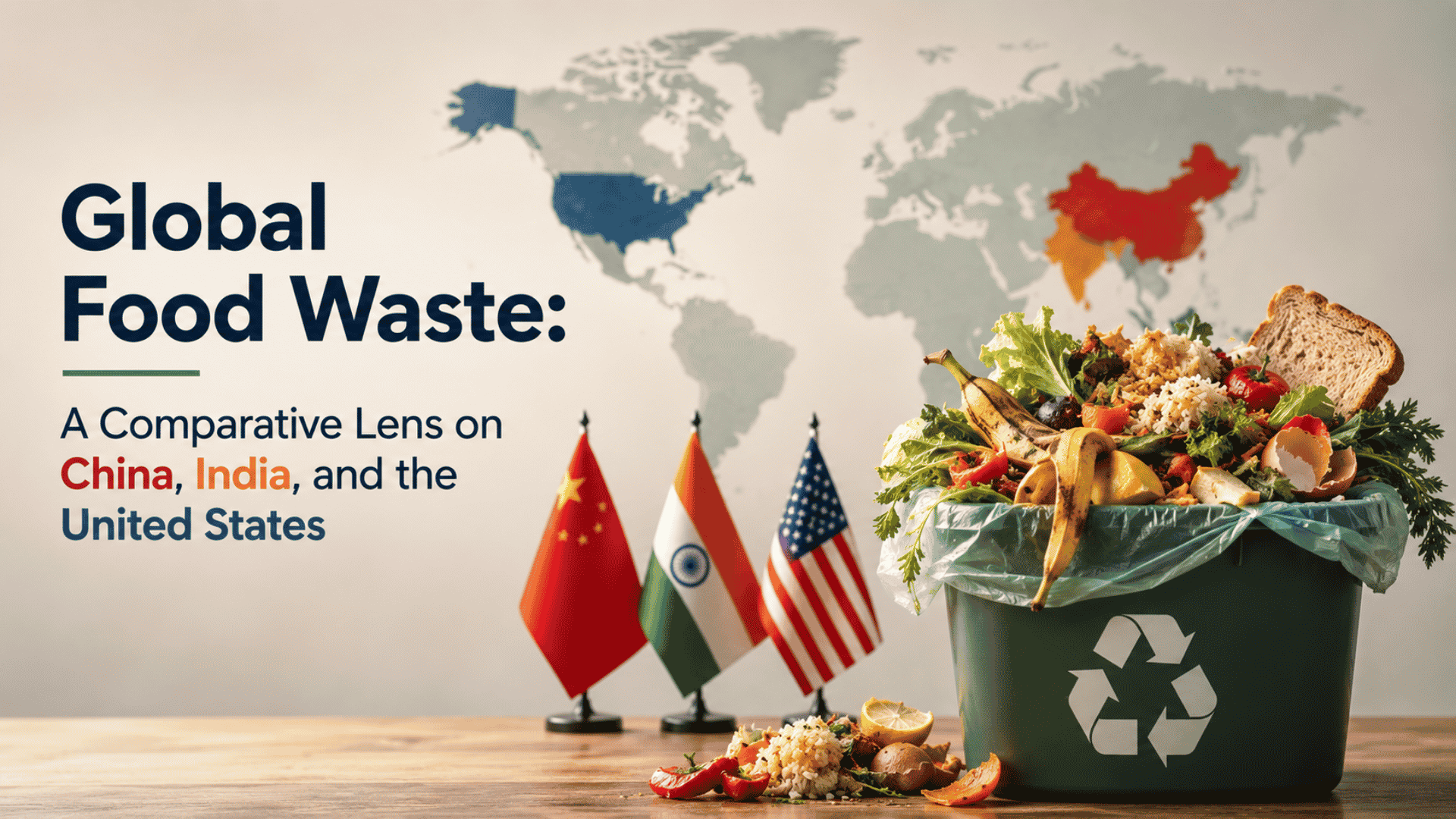
04 Jun Global Food Waste: A Comparative Lens on China, India, and the United States
As the global population expands, food production has scaled to unprecedented levels. Yet, this growth has been accompanied by a parallel rise in food waste. The paradox is striking: the world produces enough to feed everyone, but inefficiencies across the system prevent a substantial share from ever being consumed. According to the UNEP Food Waste Index Report 2024, 1.05 billion tonnes of food waste were generated globally in 2022, accounting for nearly 19% of food available at the consumer level. At the same time, around 783 million people remain undernourished, underscoring that the challenge is not production, but distribution and system efficiency.
This imbalance becomes clearer when examining the largest contributors, China, India, and the United States. In absolute terms, China generates over 108 million tonnes of food waste annually, followed by India with 78 million tonnes, and the United States with approximately 24 million tonnes. While population size explains part of this scale, differences in income levels and consumption patterns reveal deeper structural contrasts.
Public healthcare is the state’s promise to protect citizens’ health. Government spending on clinics, hospitals, and prevention not only treats illness but keeps society productive. While some emerging economies have successfully institutionalised equitable access, others, like India, continue to face structural bottlenecks that limit outcomes despite growth.
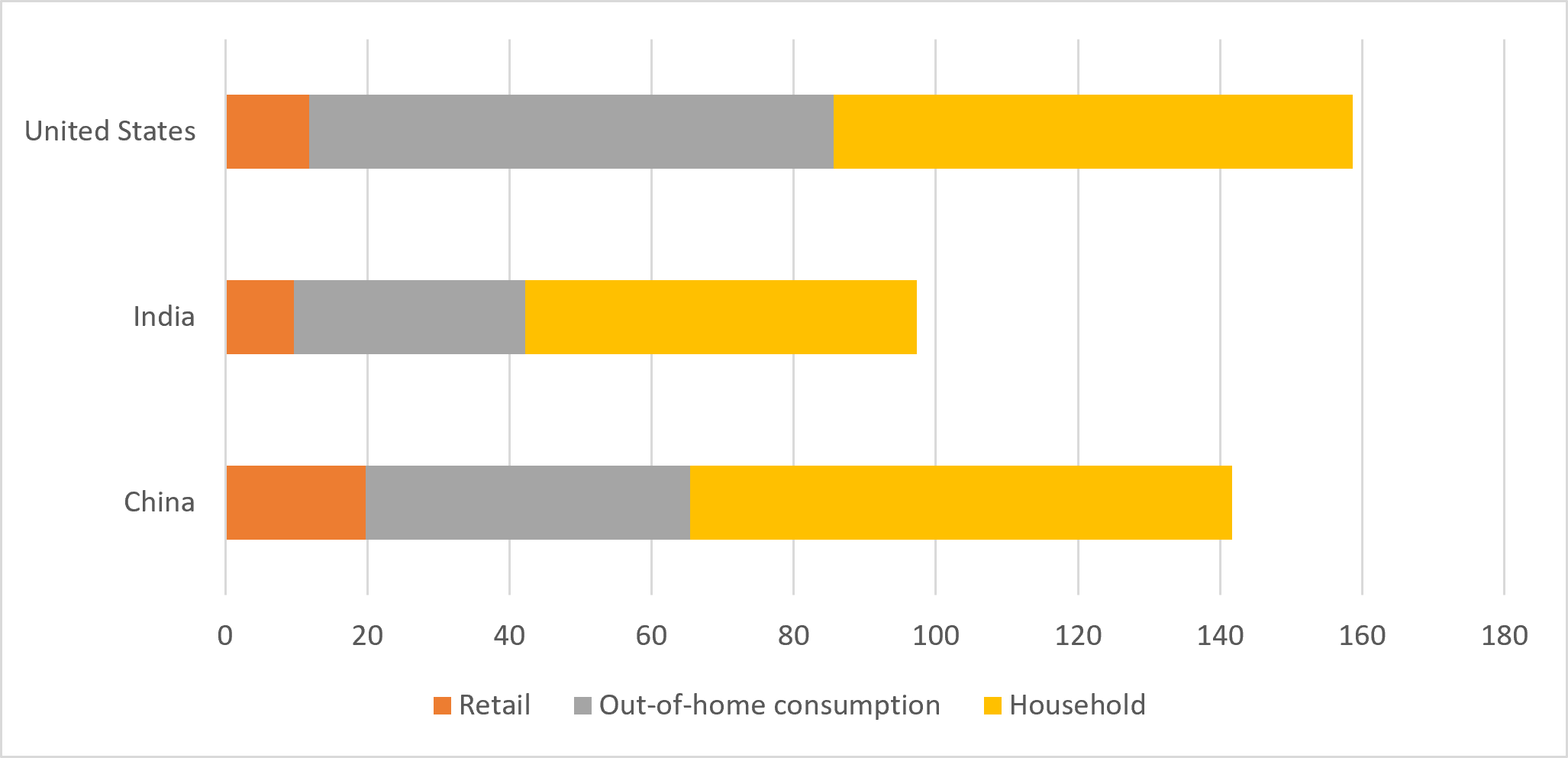
Fig 1: Food Waste by Sources- Retail, Out-of-Home & Household (kg/capita/year)
Source: Our World in Data
Figure 1 highlights how waste is distributed across consumption channels. The United States records the highest per capita waste (~158 kg/year), driven largely by out-of-home consumption, including restaurants and institutional food services. This reflects a high-income consumption model, where over-purchasing, large portion sizes, and strict quality standards result in significant waste at the consumer end.
China, at around 141 kg per capita, represents a transitional pattern. Household waste remains dominant, but rising urbanization and income growth are increasing food service-related waste. India, with approximately 97 kg per capita, shows the lowest consumer-level waste among the three. However, this does not imply efficiency; rather, it reflects lower consumption capacity, with substantial losses occurring earlier in the supply chain due to storage and distribution constraints.
When intense ambient temperatures pair with high relative humidity, they breach the boundaries of human biology. The human body relies on evaporative cooling to maintain internal equilibrium; when this mechanism fails due to ambient heat stress, cognitive function drops, physical fatigue accelerates, and labor velocity contracts.
On a macro scale, this thermal tax systematically erodes labor productivity. The International Labour Organization (ILO) projects that even under a strict 1.5°C warming pathway, extreme heat will strip away 2.2% of total working hours worldwide by 2030, an annual macroeconomic toll of $2.4 trillion, or the permanent loss of 80 million full-time jobs
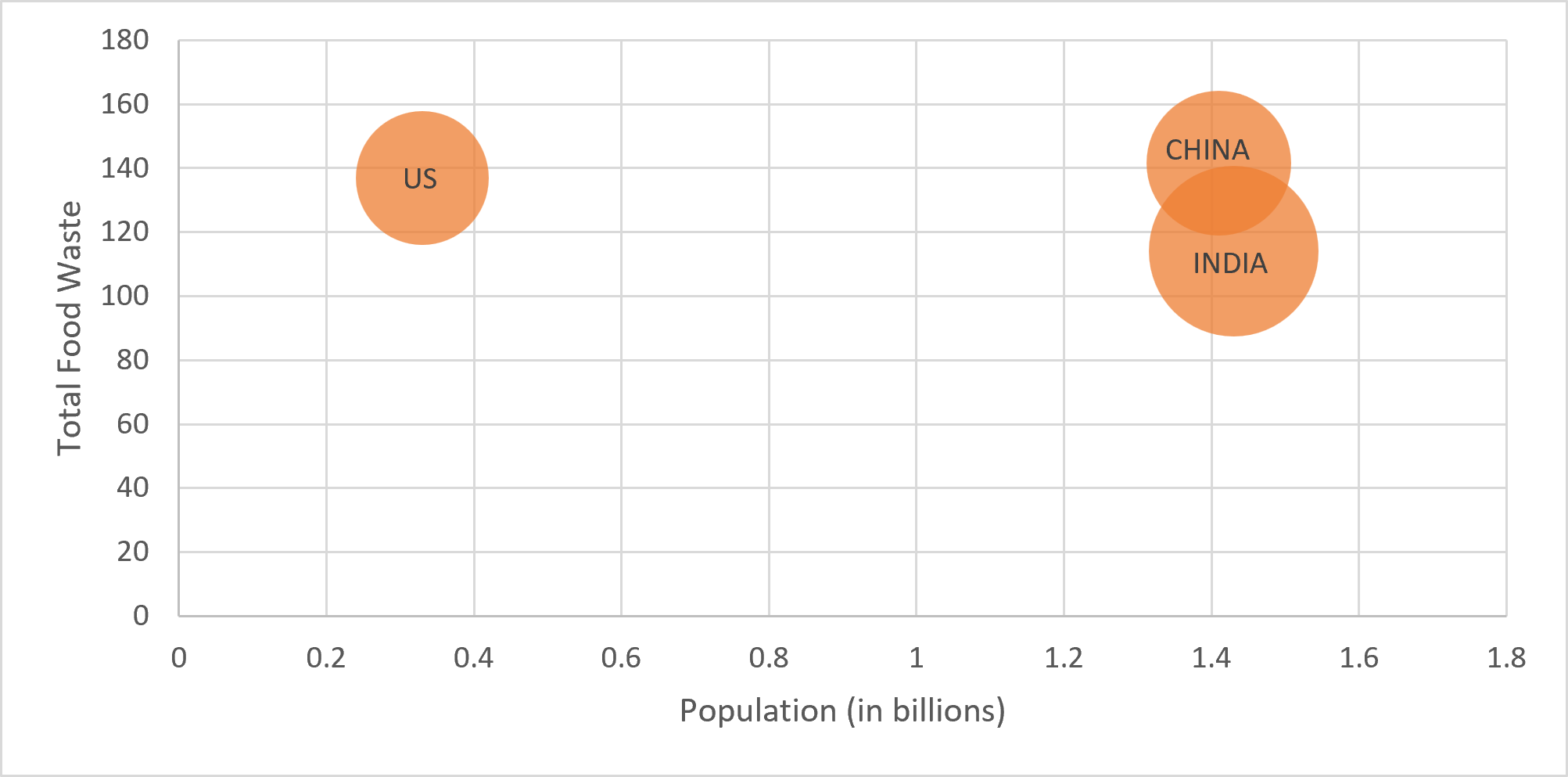
Fig 2: Population, GDP per Capita, and Food Waste
Source: The World Bank Data; Our World in Data
To further understand these dynamics, Figure 2 maps the relationship between population (scale), GDP per capita (economic capacity), and total food waste. China and India cluster at high population levels, indicating that their total waste is largely scale-driven. However, China’s higher position reflects the additional impact of rising incomes and changing consumption patterns. In contrast, the United States, despite its smaller population, shows disproportionately high waste, driven by its high GDP per capita and consumption intensity.
Together, these patterns reveal a critical insight: food waste does not increase linearly with population; it evolves with income and system development.
In lower-income contexts like India, waste is primarily a supply chain issue, occurring before food reaches consumers. In high-income economies such as the United States, waste shifts to the consumption stage, driven by behavioural and market factors. China occupies an intermediate position, where both structural inefficiencies and evolving consumption patterns coexist.
This comparative perspective reinforces a broader conclusion: the global food waste crisis is not a question of scarcity, but of how effectively food moves through the system, from production to consumption.
South Korea’s Stand on Food Security
In 1995, South Korea recycled just 2% of its food waste. Today, it recycles 96.8% of 4.81 million tonnes annually, according to the country’s Ministry of Climate, Energy and Environment. This is arguably the most dramatic food waste turnaround in history and it was built on four interlocking pillars.
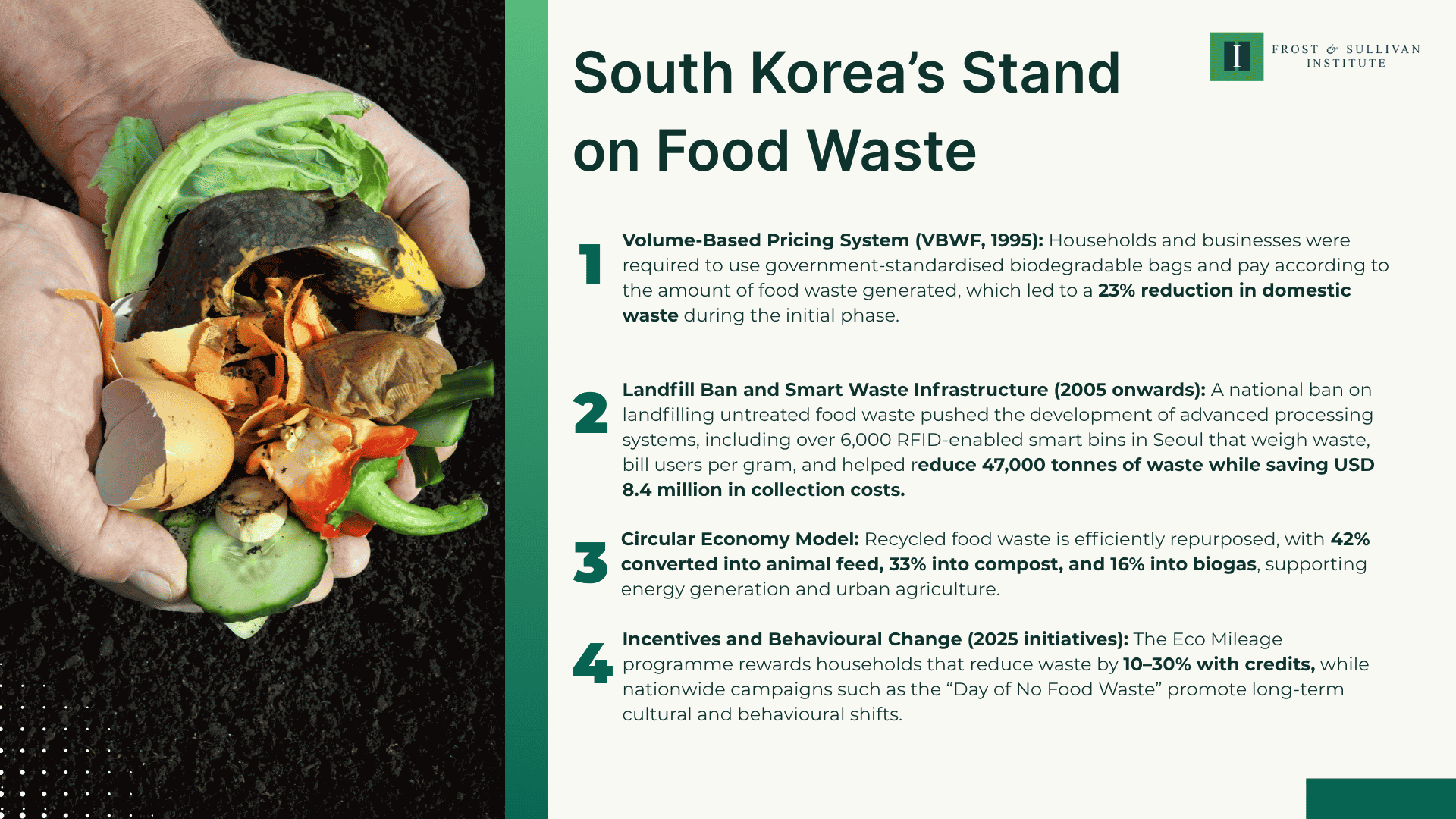
South Korea proves that the right price signal, backed by the right technology, can reverse decades of waste culture within a single generation.
Conclusion
South Korea’s experience shows that food waste is not an unavoidable outcome of growth, but a result of how effectively incentives, infrastructure, and behaviour are aligned. For India, this implies strengthening supply chains and storage systems to reduce pre-consumer losses, while gradually introducing pricing mechanisms to influence household behaviour. China, positioned in a transition phase, can integrate regulatory controls with smart technologies to manage both rising consumption and systemic inefficiencies.
For the United States, the focus must shift toward correcting consumption excess through economic disincentives, food donation frameworks, and behavioural nudges. Across all three economies, the central lesson is clear: food waste responds to policy design and market signals. Adapting South Korea’s model in context-specific ways can transform food systems from waste-intensive to efficiency-driven.
Blog by Samyuktha Purusothaman Nair,
Research Analyst, Frost & Sullivan Institute