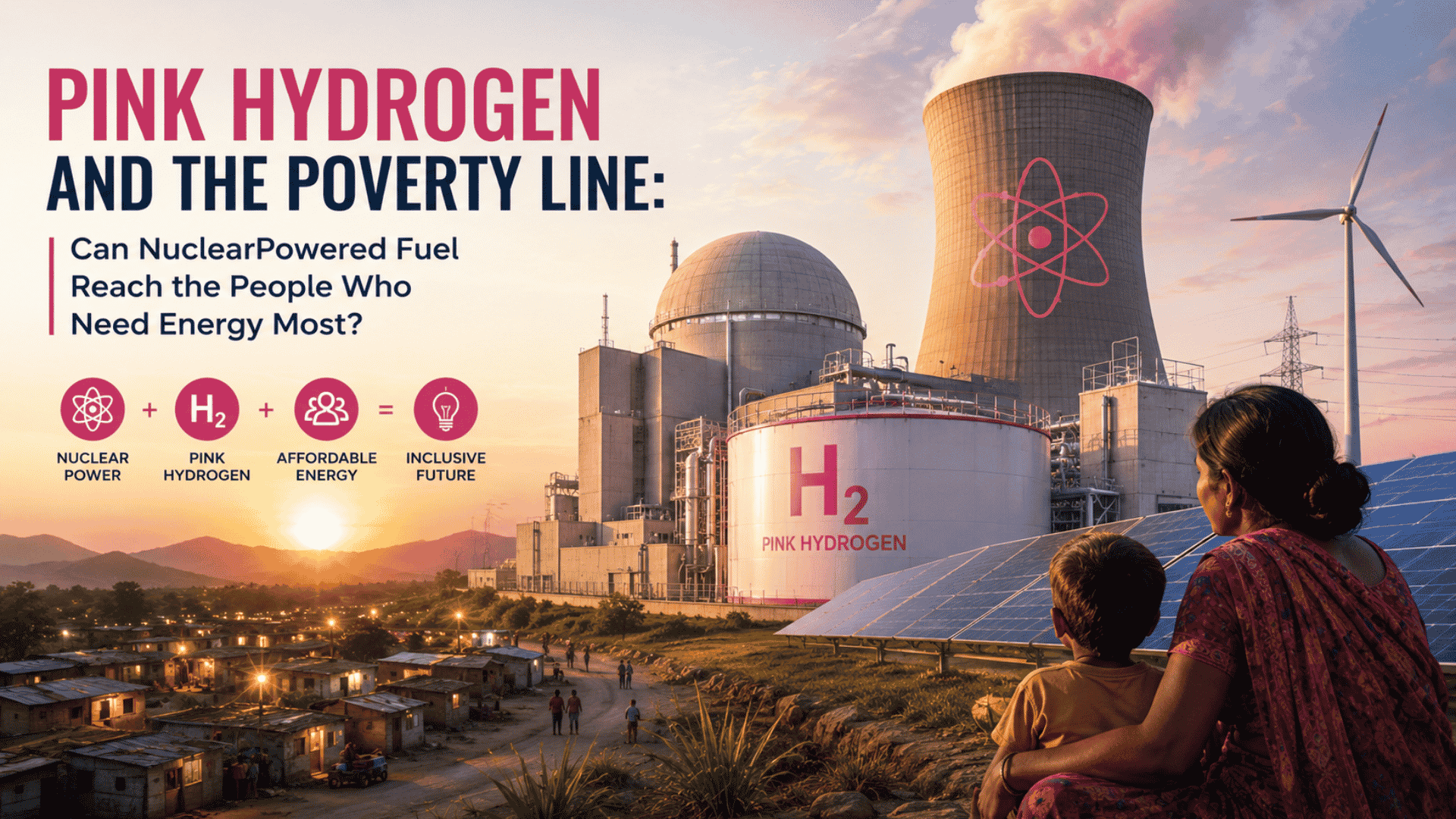
Pink hydrogen, produced using nuclear power, is gaining attention as a clean and reliable energy source. It is often promoted as a stable alternative to renewable-powered hydrogen, especially for regions that need constant, dependable power. But most of this attention has focused on industry and large energy grids, not on the people who struggle to afford energy in the first place. This paper asks a simple question: can pink hydrogen actually help reduce energy poverty, or is it mainly useful for industrial and grid-scale needs?
To answer this, the paper first looks at what energy poverty really means, not just lack of access, but also unaffordable costs and unreliable supply. It then examines pink hydrogen’s technical strengths, its production costs, and the regulatory barriers it faces, including its exclusion from many renewable energy subsidies. A central fact shapes this analysis: pink hydrogen currently costs roughly USD 3 to 8 per kilogram, depending on the reactor type and scale used, and it is still an early-stage technology with very limited real-world use. Any claim that pink hydrogen can be made accessible to poor populations must directly address this cost problem, rather than assume it will simply resolve itself over time. This comparison between promise and practicality runs through the entire paper.
The paper finds that while pink hydrogen shows long-term potential, it is not currently designed or priced in a way that reaches energy-poor communities. It closes by outlining what would need to change, in financing, policy, and project design, for that to happen.