The world is entering an economic transition that cannot be solved by simply creating more jobs for younger populations. People are living longer, fertility rates are falling, and the share of older people is expanding rapidly. The United Nations estimates that the global population aged 60 and above reached 1.2 billion in 2025, up from about 541 million in 1995, and is projected to reach 2.1 billion by 2050.
This transition matters because ageing changes the structure of an economy: fewer people may be available to work, while demand for healthcare, pensions and long-term care rises. But it also creates a different question: can economies convert longer lives into longer participation, new services and new employment?
The Scale of the Ageing Challenge
Population ageing is rapidly changing the demographic structure of economies.
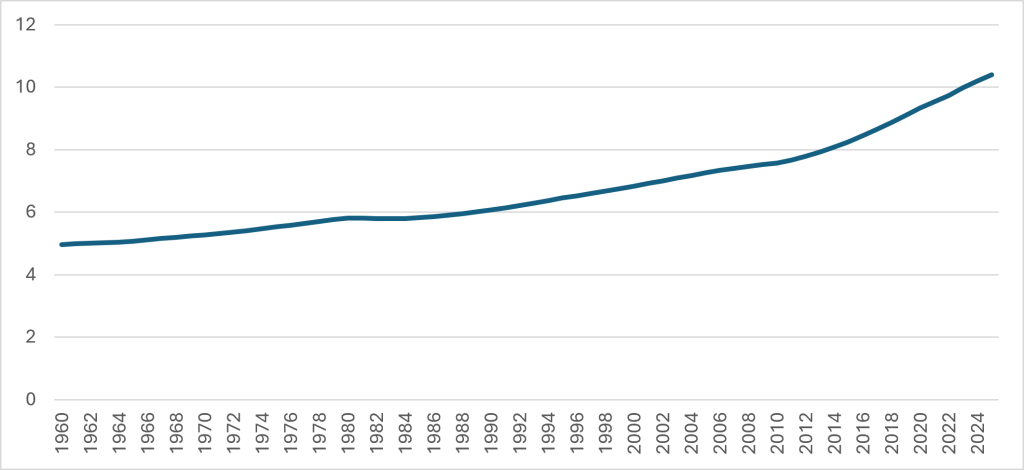
Fig 1: Population ages 65 and above (% of total population)
World Bank data show that the share of people aged 65 and above globally has risen from about 5% in 1960 to around 10.4% in 2025, effectively doubling within a generation. The concentration is particularly striking in the world’s oldest populations: in 2025, Monaco had 36.2% of its population aged 65+, followed by Japan at 29.8%, Puerto Rico at 24.7%, Italy at 24.6% and Portugal at 24.5%. Beyond demographics, the shift is becoming an economic challenge.
Old-age-to-working-age ratio increased from 19:100 in 1980 to 31:100 in 2023, projected to reach 52:100 by 2060.
Working-age population expected to decline by 8% by 2060.
Without productivity and labour-market adaptation, annual GDP-per-capita growth may slow from 1.0% to 0.6%.
The underlying forces are clear: longer life expectancy combined with persistently low fertility is reducing the number of new workers entering the economy, while increasing the number requiring pensions, healthcare and care services.
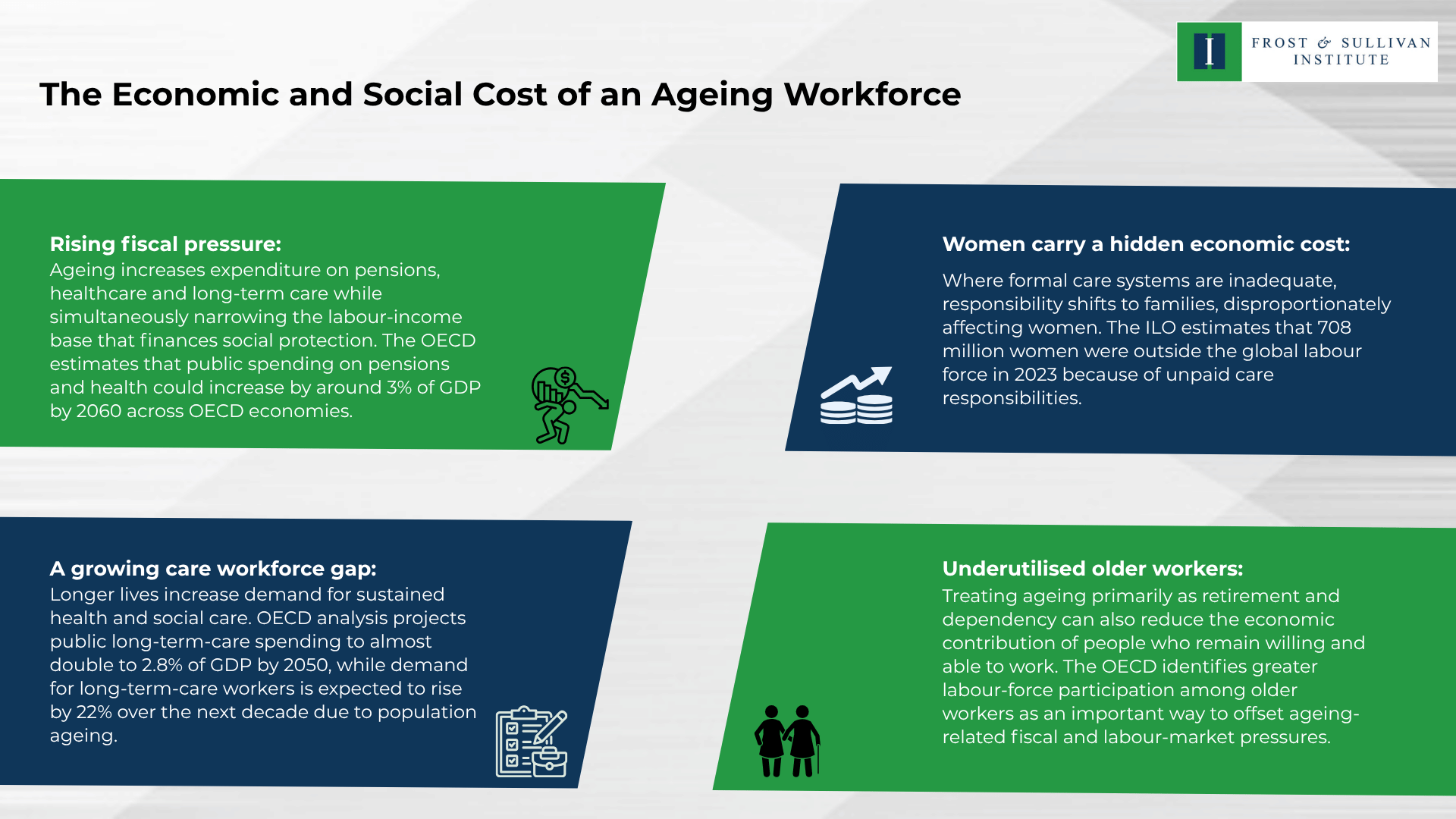
The Economic and Social Cost of an Ageing Workforce
The consequences of population ageing extend beyond a smaller workforce. They affect public finances, healthcare systems, the availability of caregivers and the ability of households, particularly women, to participate in paid work.
The challenge, therefore, is not simply supporting more older people. It is financing longer lives while maintaining enough workers, caregivers and productive capacity to sustain the systems on which both older and working-age populations depend.
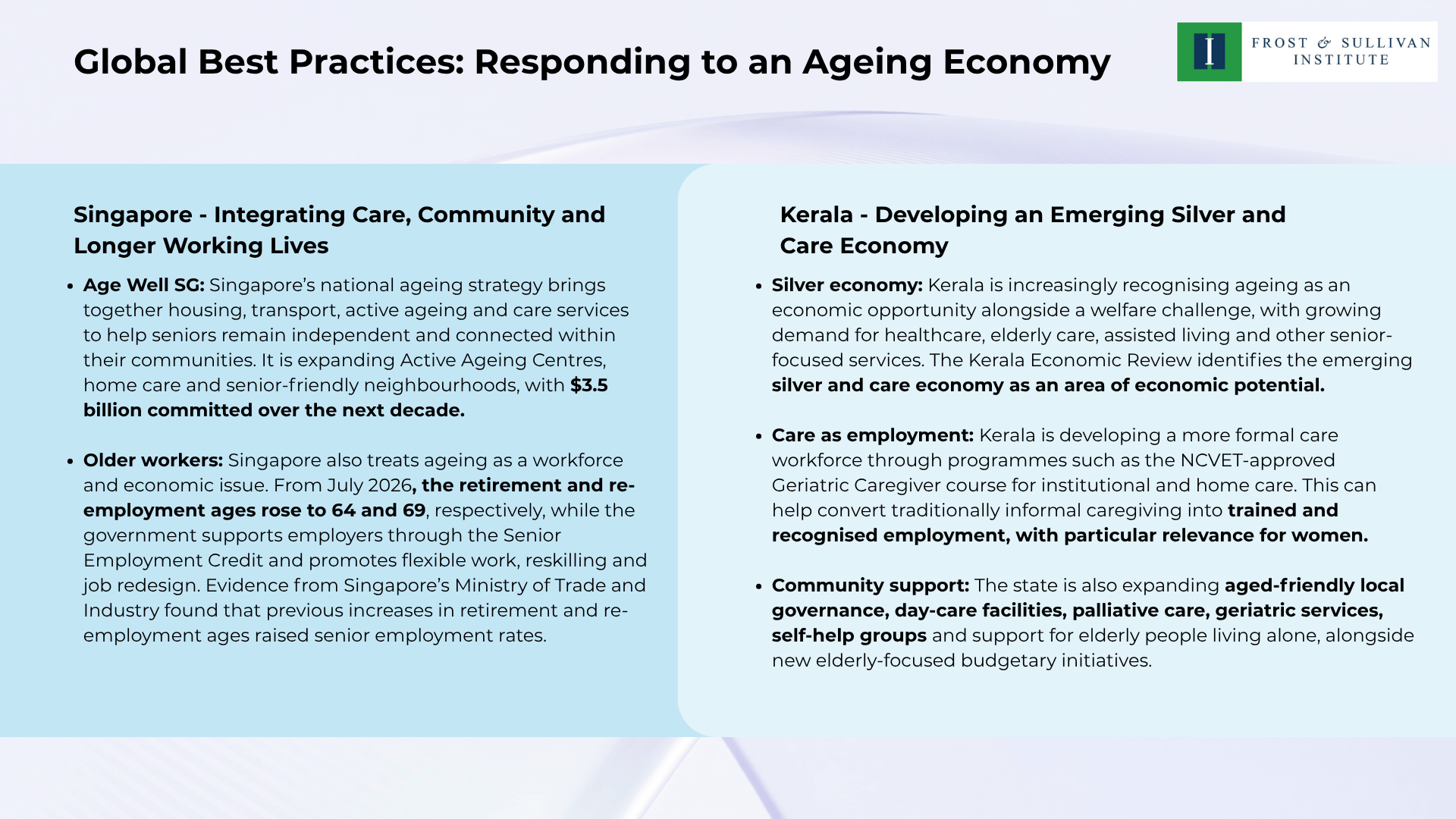
Global Best Practices: Responding to an Ageing Economy
Together, these approaches show why ageing policy can be treated as economic infrastructure, shaping the supply of workers, the organisation of care, community services and the markets that emerge around longer lives.
Conclusion
Population ageing is not simply a demographic shift that economies must finance; it is a structural transition that changes how societies organise work, consumption, care and public investment. The central challenge is therefore not how to slow ageing, but how to ensure that longer lives translate into longer periods of participation, independence and economic value. This requires policymakers to recognise ageing as part of economic planning rather than a separate welfare agenda. Investing in age-friendly environments, productive longevity and sustainable care systems can help economies turn demographic change into an opportunity for more inclusive and resilient growth.
Blog by Samyuktha Purusothaman Nair, Research Analyst, Frost & Sullivan Institute